
 I had the pleasure of another visit to the Falkland Islands that coincided with the MLA elections in December 2025. This rather unusual OpenFalklands post looks at the trip and what I got up to on this South Atlantic archipelago. I hope you find it entertaining.
Northbound travel woes.
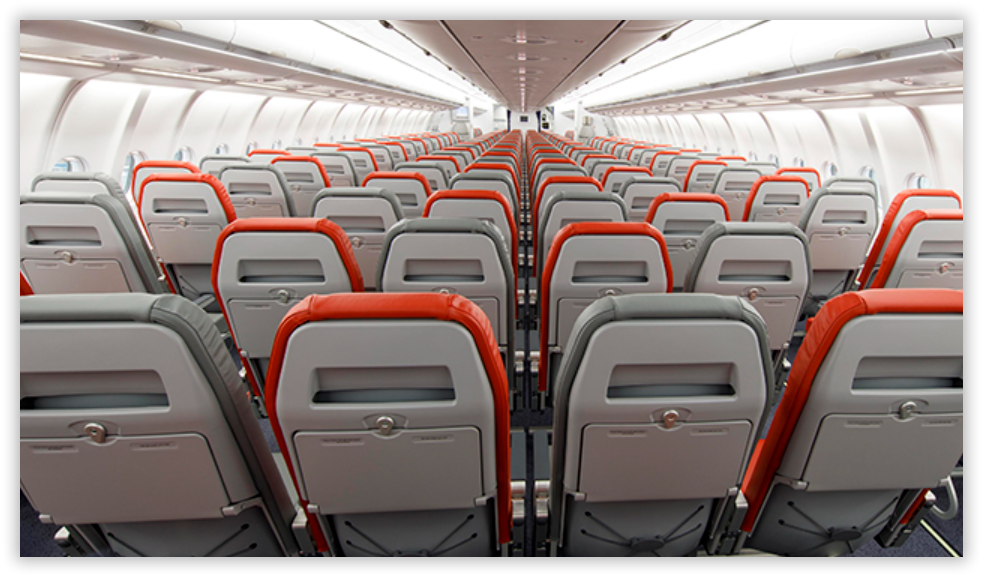
I had originally planned to visit the islands in October. However, the Members of the Legislative Assembly elections were held on 12 December 2025 rather than in November. I therefore chose to be there in December, a decision that ultimately led to the travel complications described above.
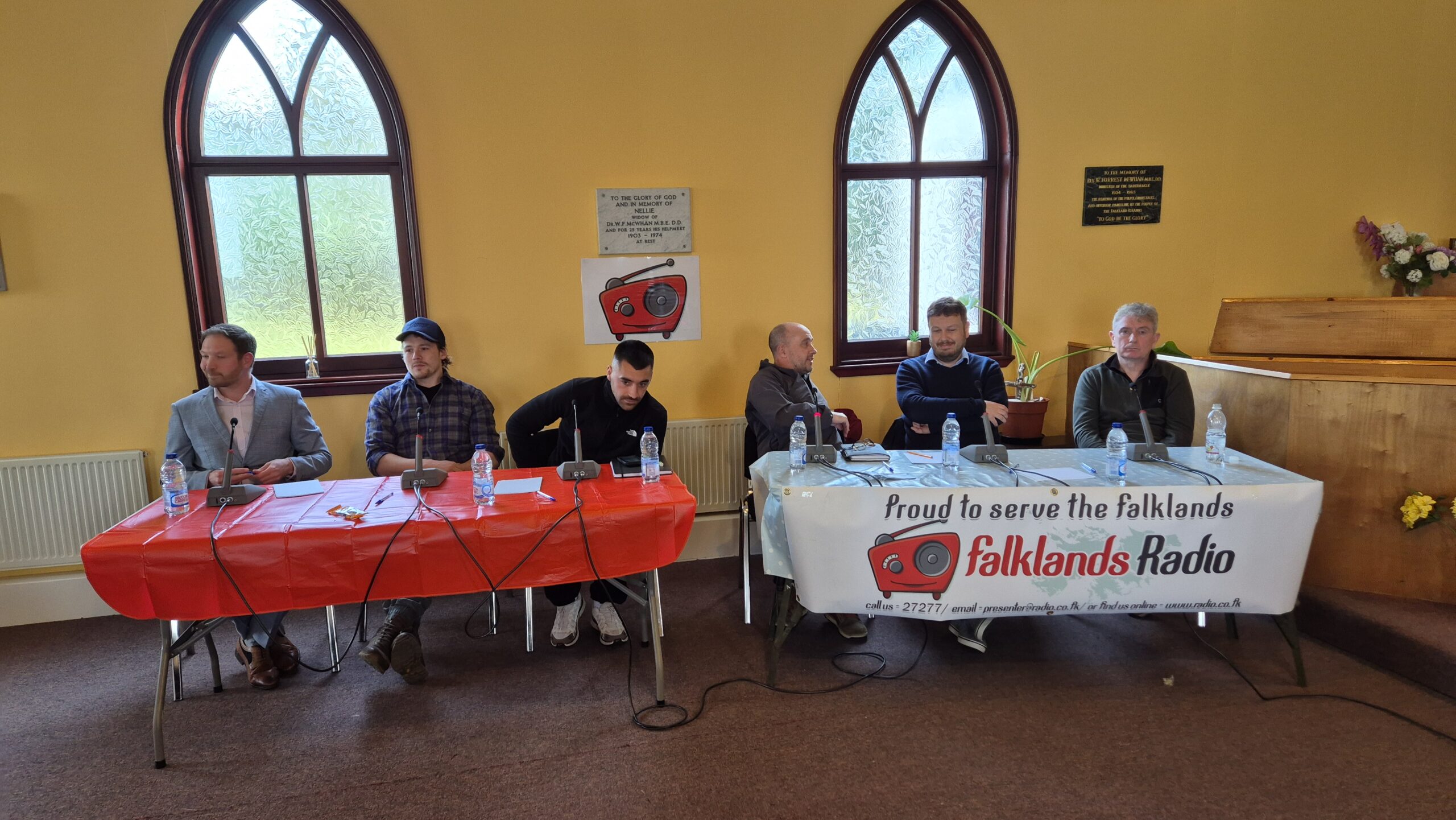
One of the Starlink Petition Group’s objectives for the elections was to circulate a questionnaire to all MLA candidates to gain a clearer understanding of their views on the future direction of telecommunications. This was successfully achieved, with the results distributed to islanders one week before polling day. The photograph below shows one of the hustings events I attended, organised by Falkland Islands Radio before the election.
The photograph below shows the Stanley candidates being informed of the voting results in the Town Hall, shortly before Andrea Clausen, the Returning Officer, announced them publicly.
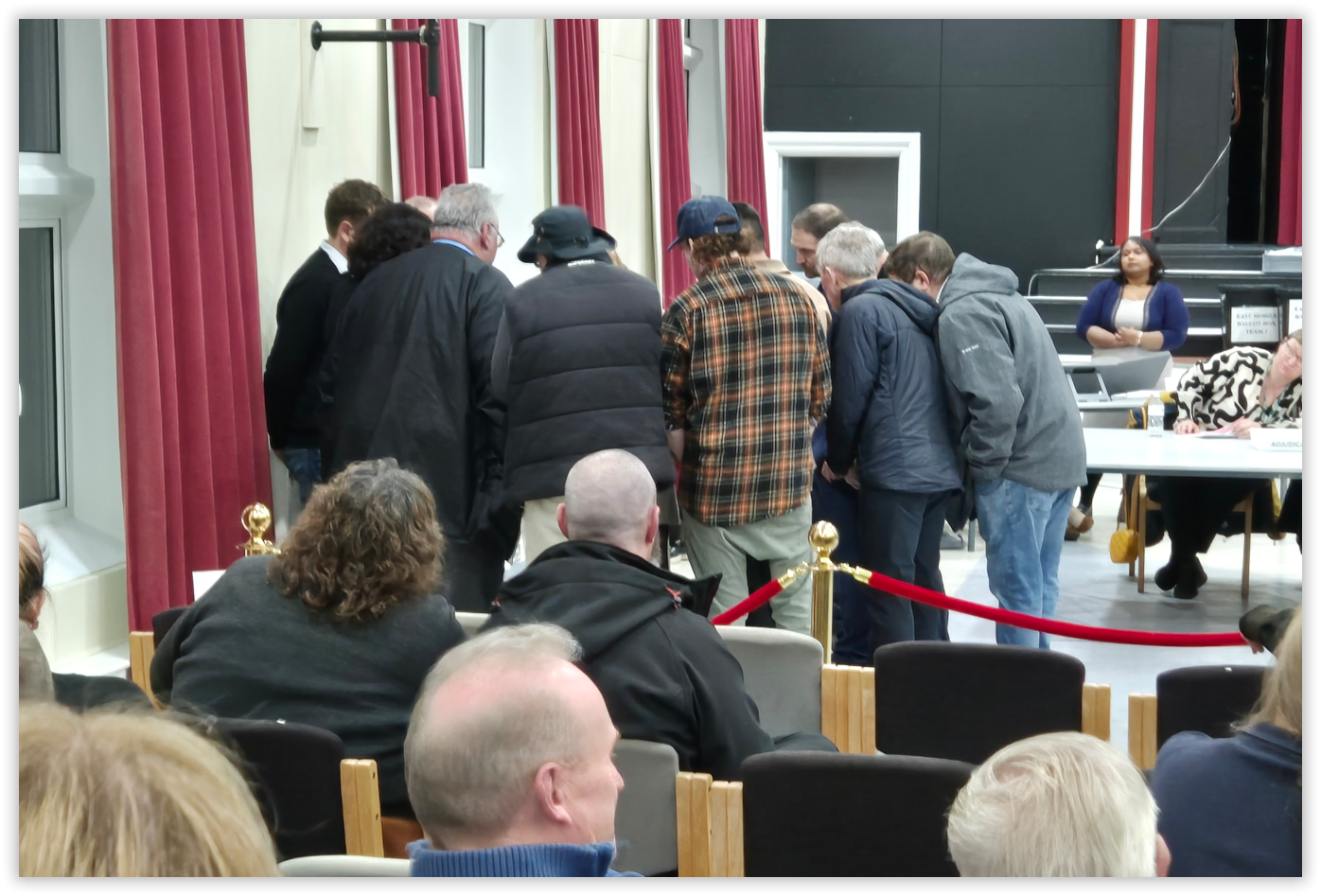
Here are the Stanley MLA results being announced.
Volunteer Point and the penguins
Although I’ve been visiting the Falkland Islands for 25 years, I’ve never visited the islands’ number one tourist spot, Volunteer Point, located north of Stanley.
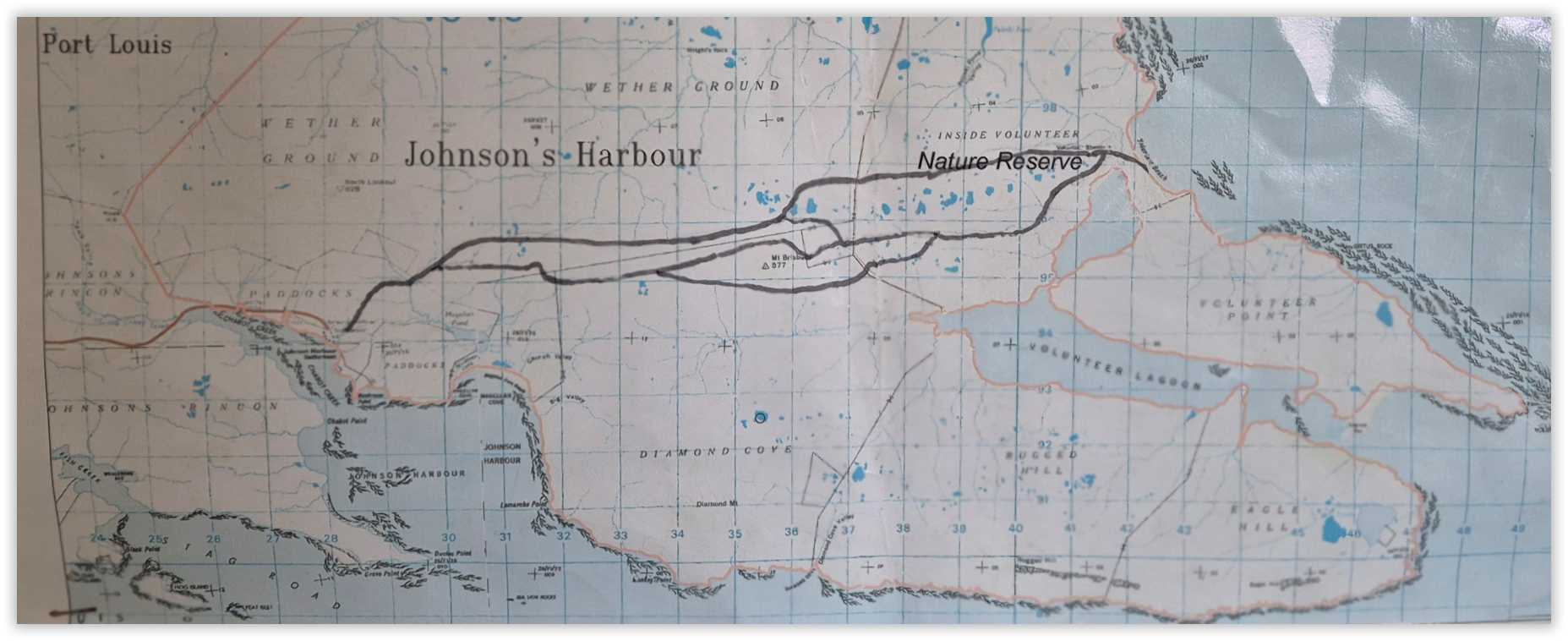
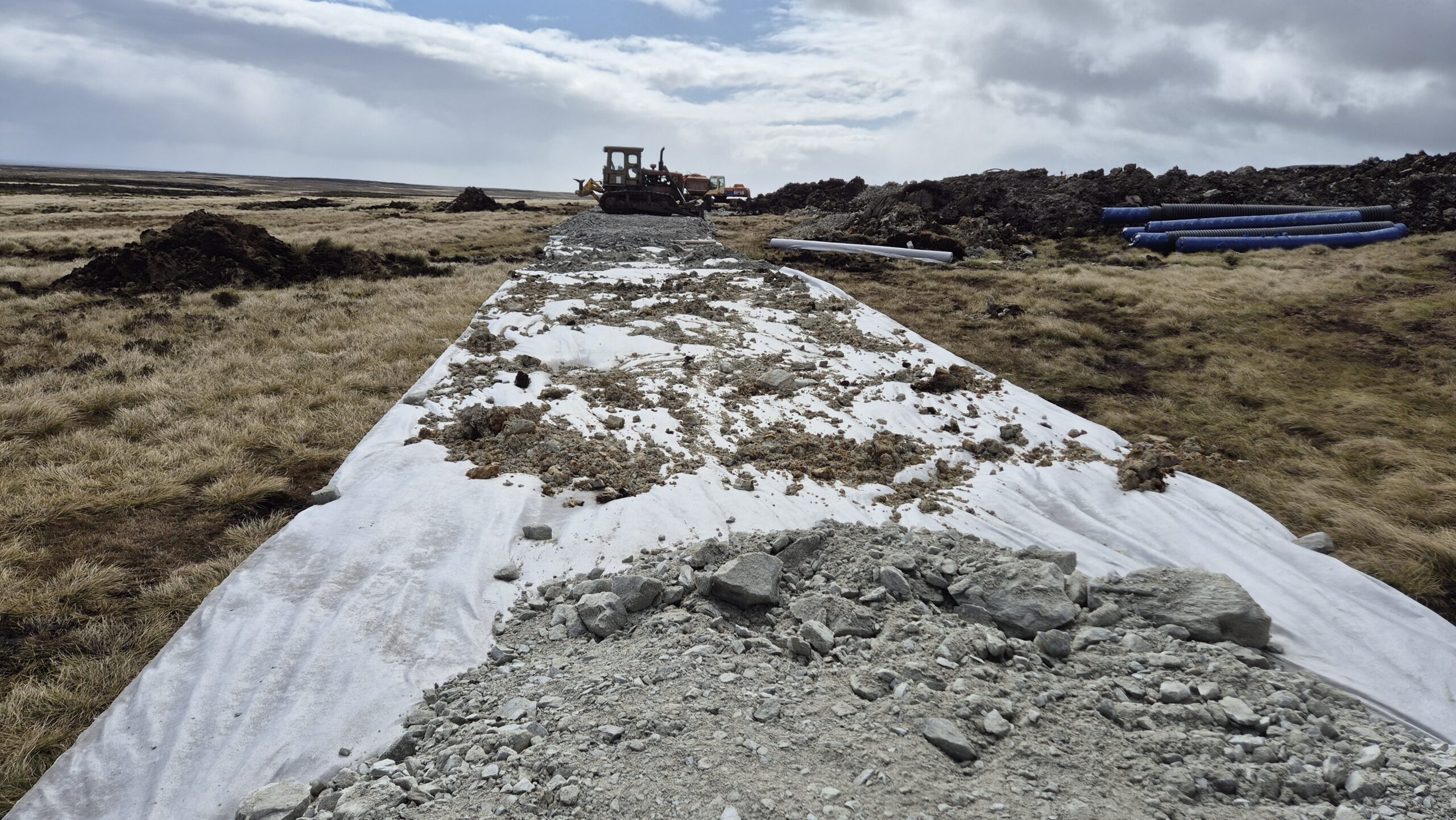
Tourists need to be escorted there because it can only be accessed by a long cross-country drive in a 4×4 driven by someone who knows the route and how to avoid getting bogged down! Oh boy, the cross-country drive to get there was something to experience! However, this most enjoyable part of the trip will soon be gone, as a road is being built that will enable tourist buses from cruise ships to have easy access to the Point.
My driver, Ken Morrison, whose nickname is ‘Carrot’, is well known, has been taking visitors there for many years, and has a lifetime’s experience of the island’s history and of the people who populate it. Indeed, aside from the penguins, the best part of the trip was the drive and the chats I had with him!
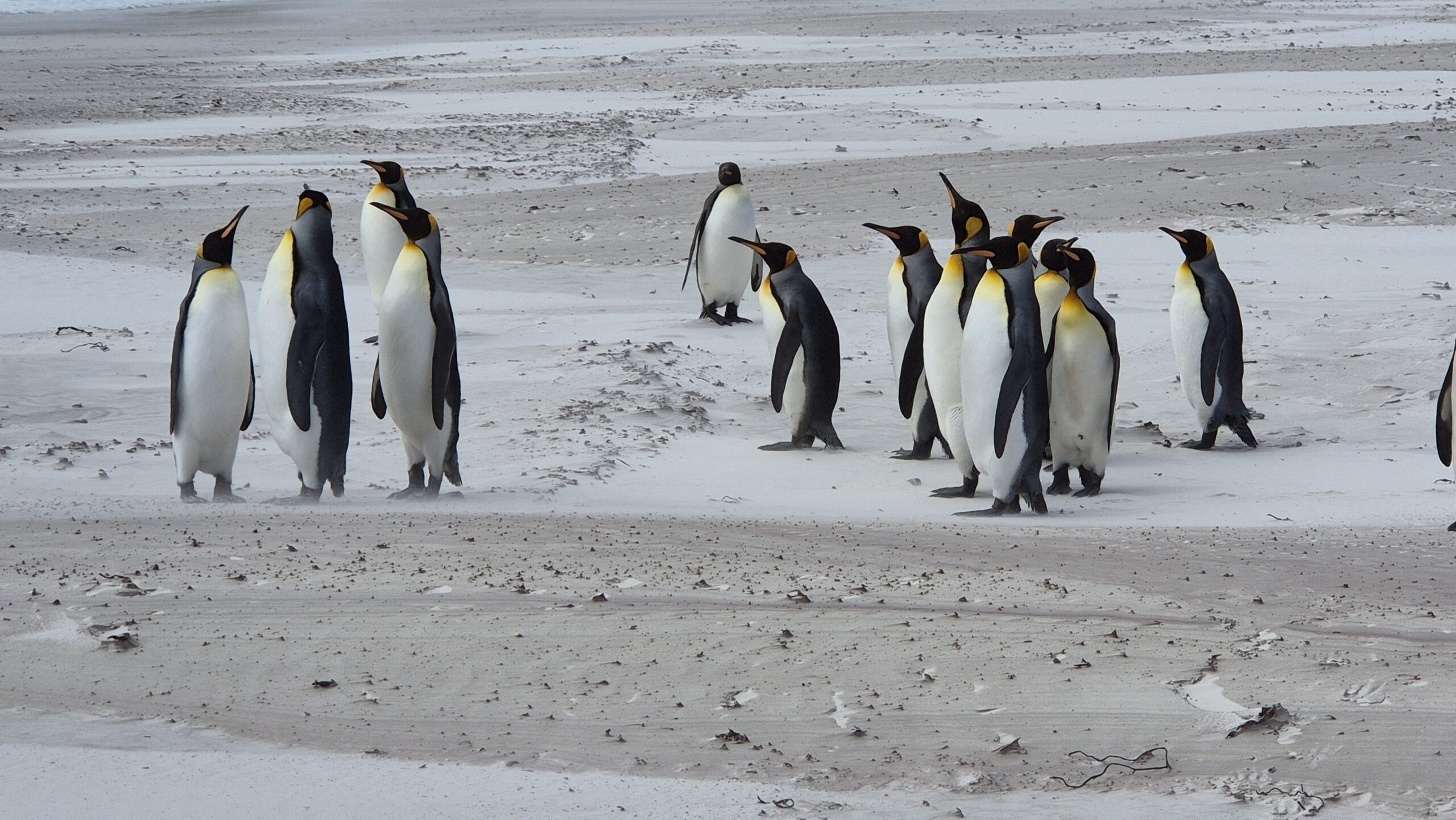
The King penguin colony.
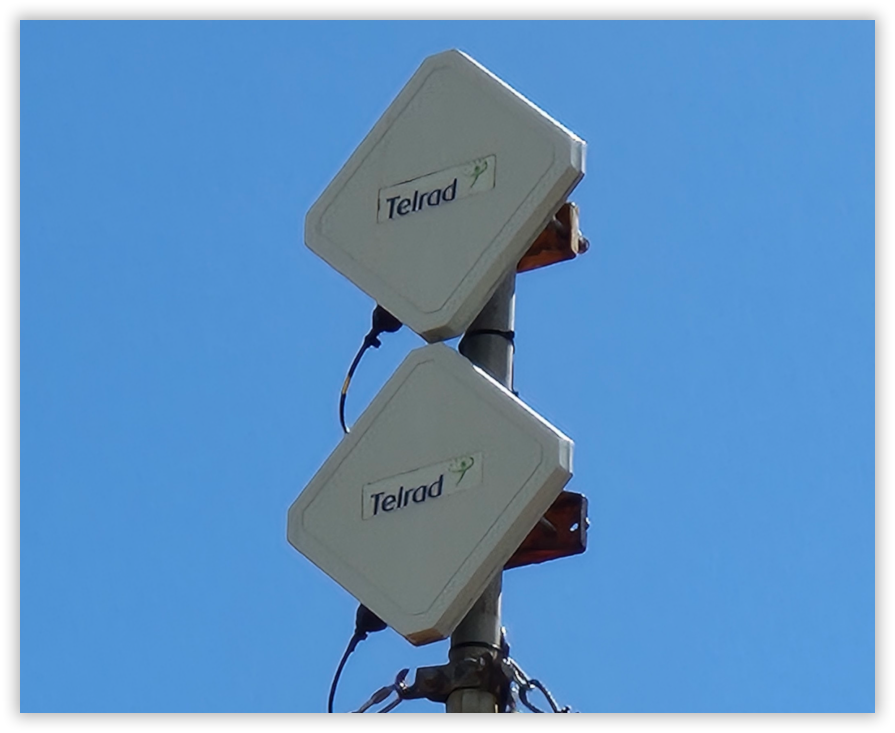
Not forgetting telecommunications, I assume these are the Telrad LTE antennas at Volunteer Point that have replaced the old WiMax link to Stanley.
Mt Maria, VHF and FM transmitter remains.
One of the things I wanted to do on this trip was to catch up with Bill Pole-Evans and renew our relationship. I first met Bill back in 2014 when I undertook an audit of the ‘new’ FM radio network by FIG. At the time, Bill strongly thought that the FM transmitter on top of Mt Maria should have been updated rather than just abandoned. Had he changed his views in the last ten years, I wondered? At that time, I never went up Mt Maria as the weather was awful. So I phoned Bill, using my £30 pay-as-you-go eSim from Sure, to ask him a rather cheeky question – would he take me up Mt Maria if the weather was OK? It turned out he hadn’t to the top for at least two years, and he had read all of my OpenFalklands posts.
I booked a place as a passenger on the Concordia Bay, the ferry between East and West Falklands, and also booked a room at the Maria Motel in Port Howard, which opened only twelve months ago. I was amazed at the low cost of the ferry – £12, heavily subsidised by the government. I drove my Mitsubishi Shogun hire car from Stanley Services to New Haven, parked in the short-term car park, and set off for the West Falklands. I later learnt that hire cars should not be taken to the West Falklands, which came as a surprise, as it was the first time I had heard about this in 25 years of visiting the islands.
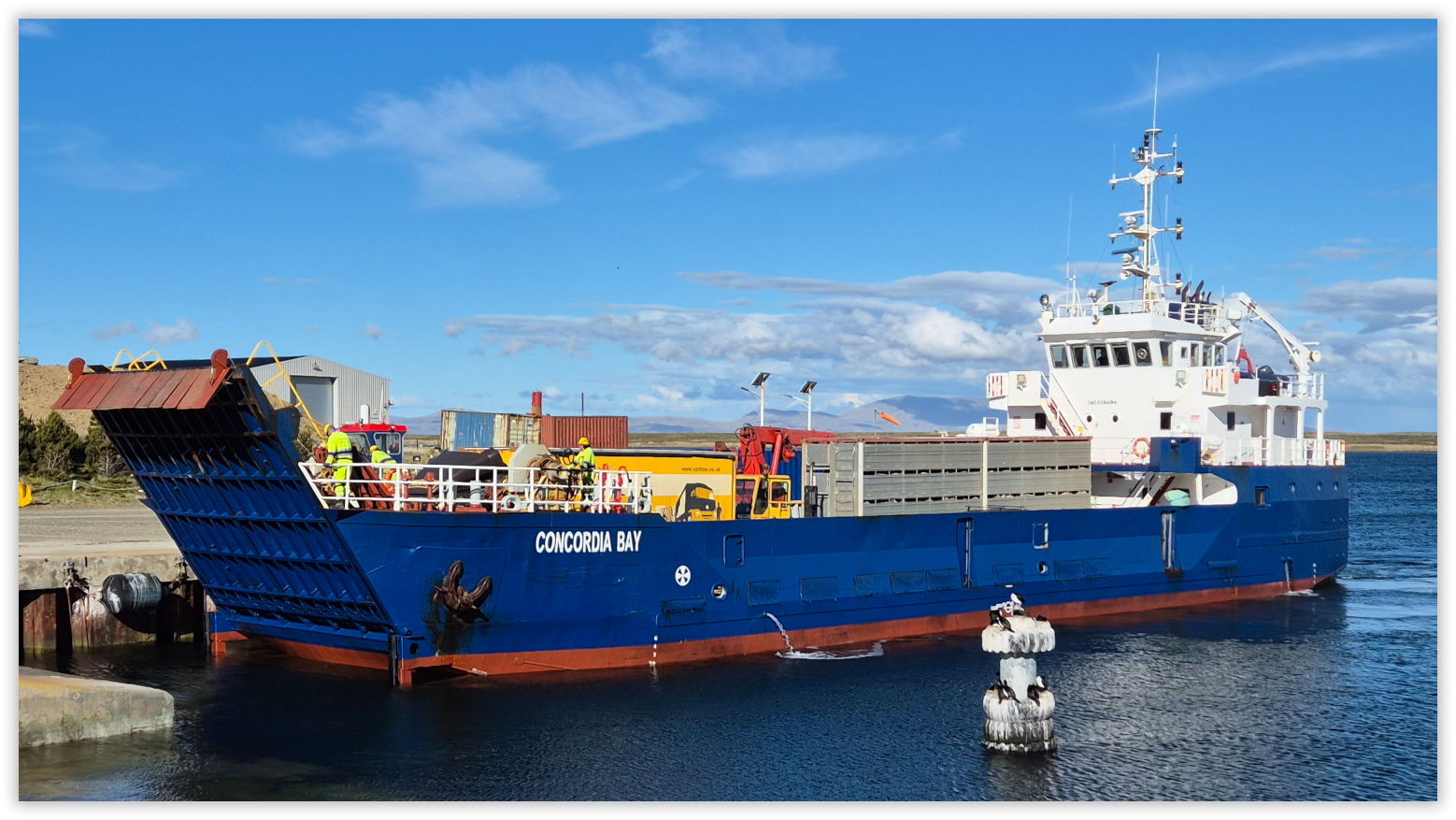
Of course, one of the things that I just had to try out was the free passenger Internet available on the ferry, which was one of the first uses of Starlink in the islands. Of course, it was only switched on after it had left the dock. It worked very well, of course.

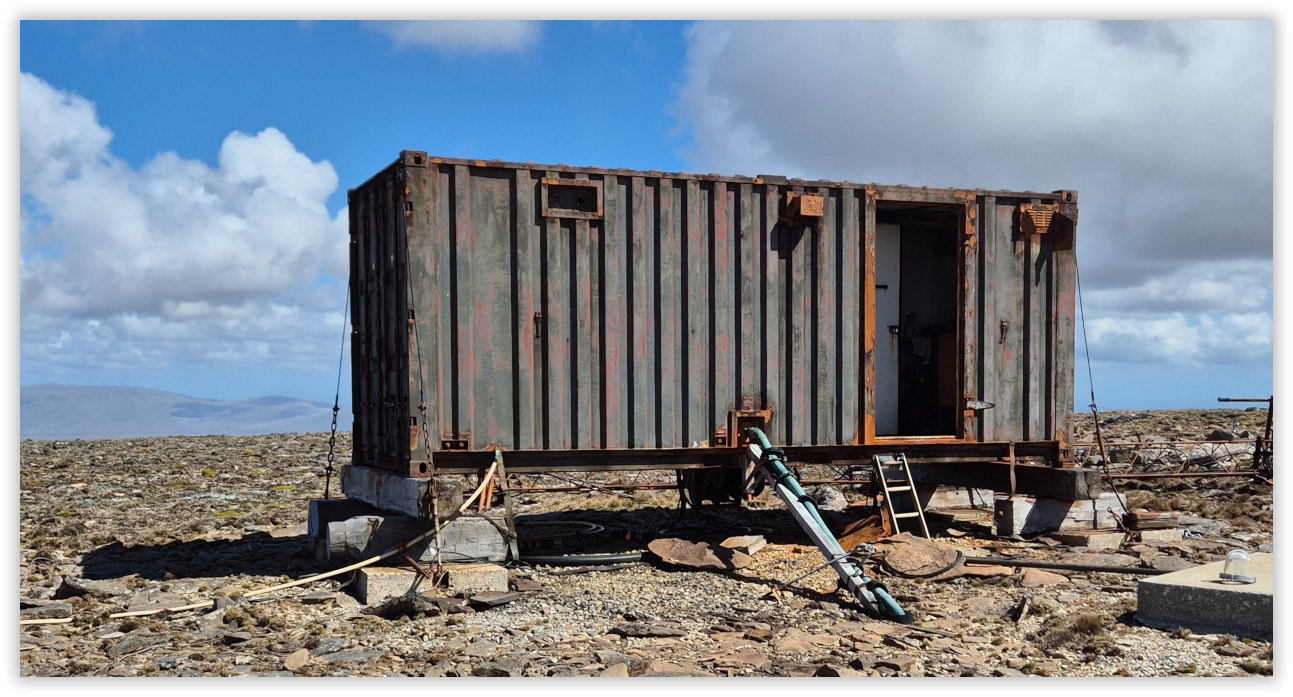
Spot the Starlink antenna…
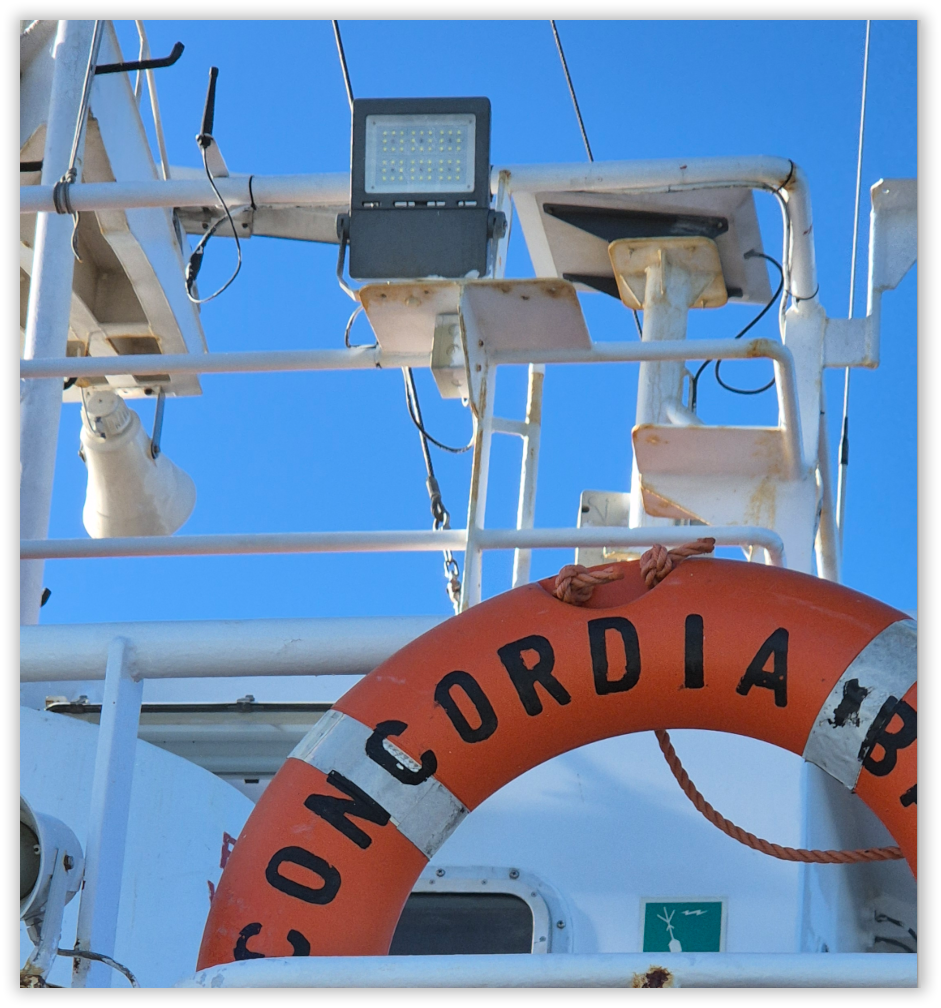
The Maria Motel.
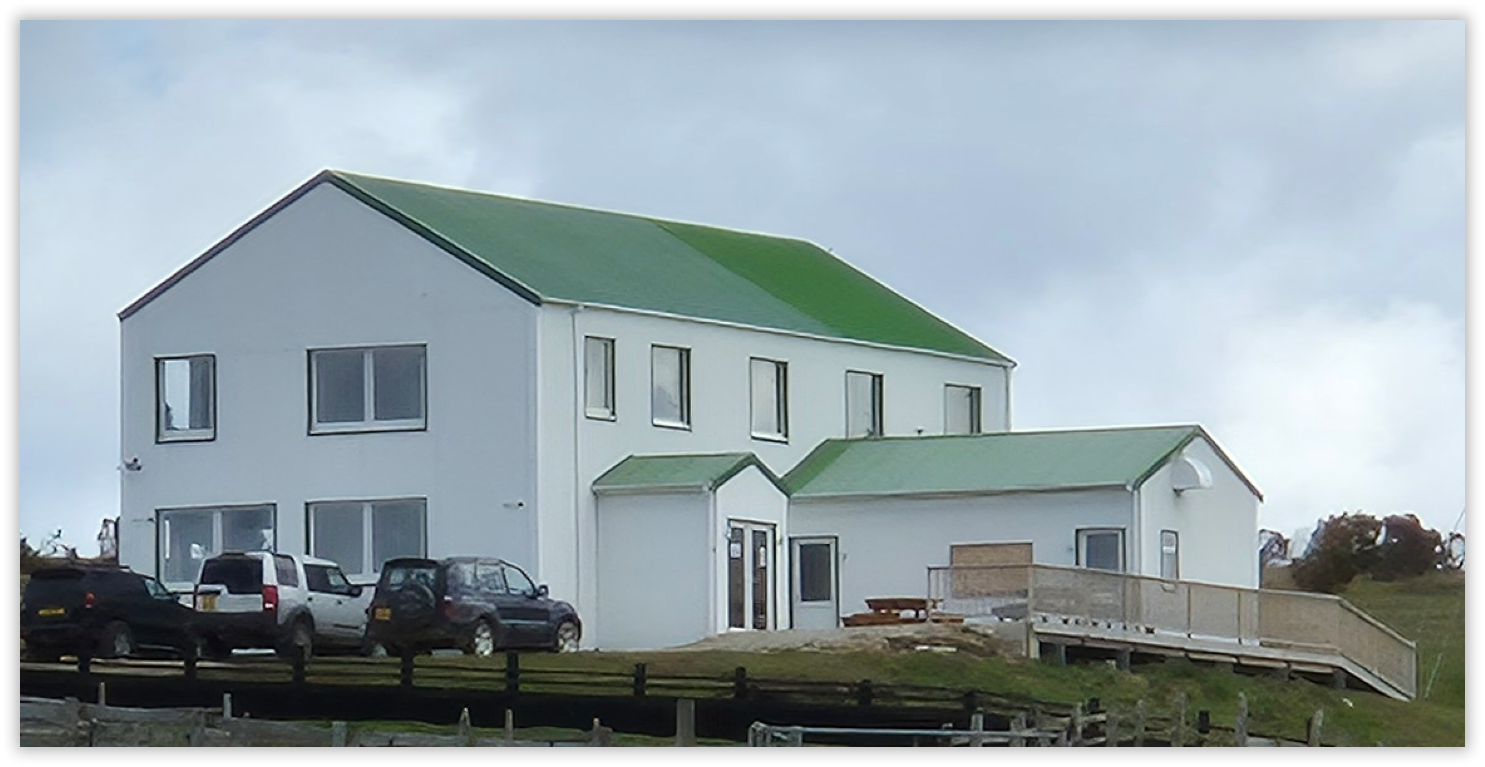
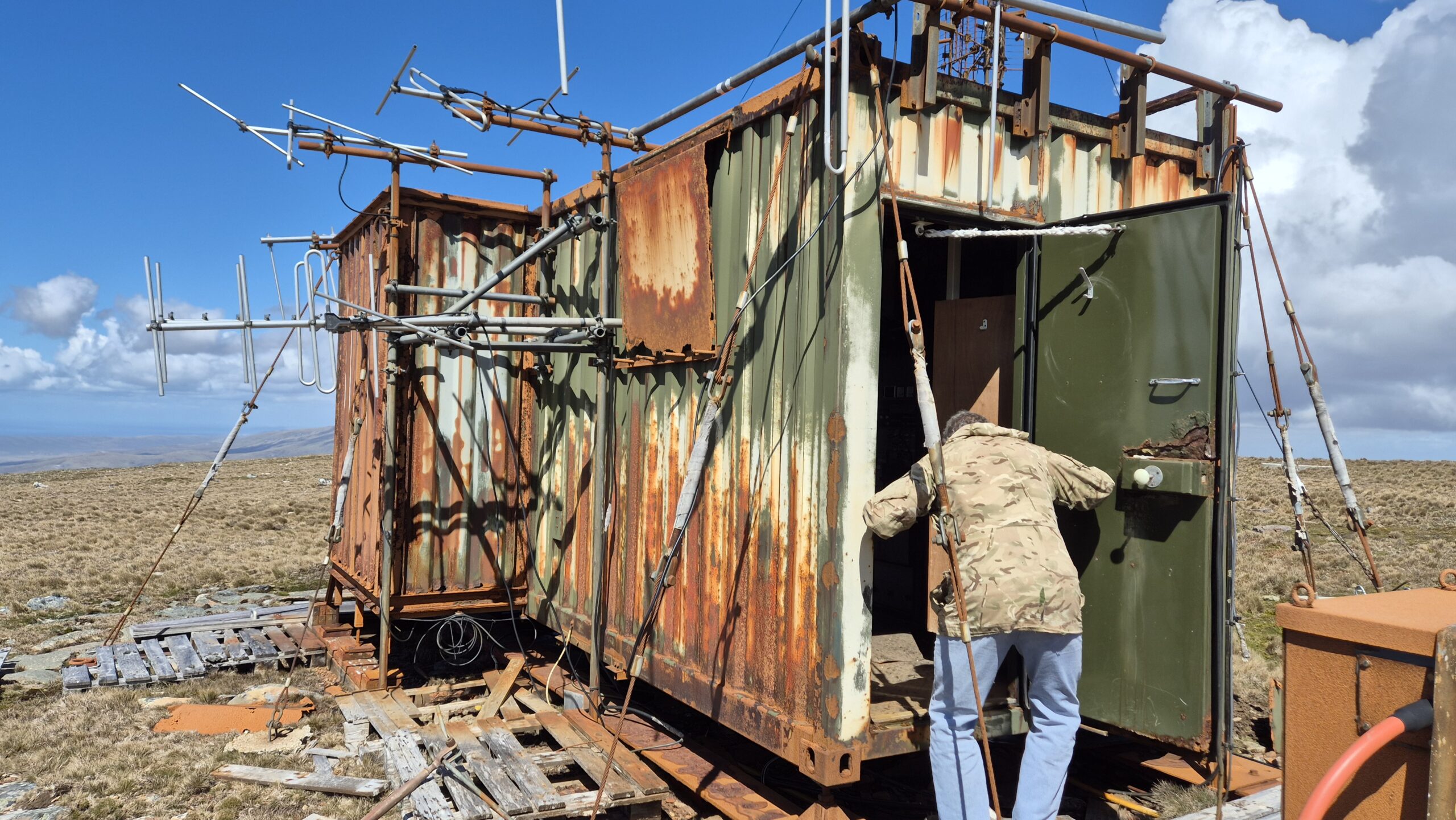
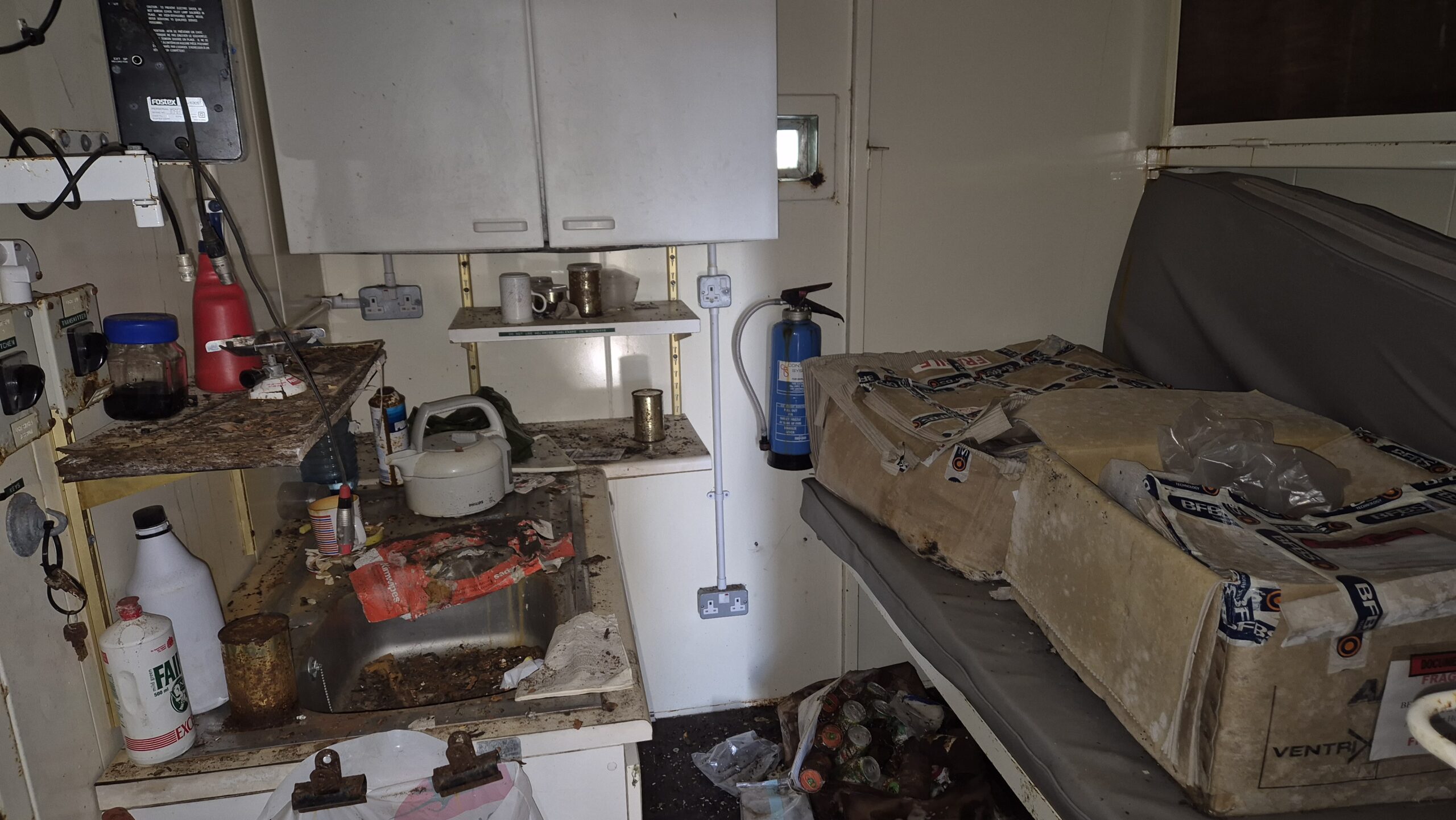
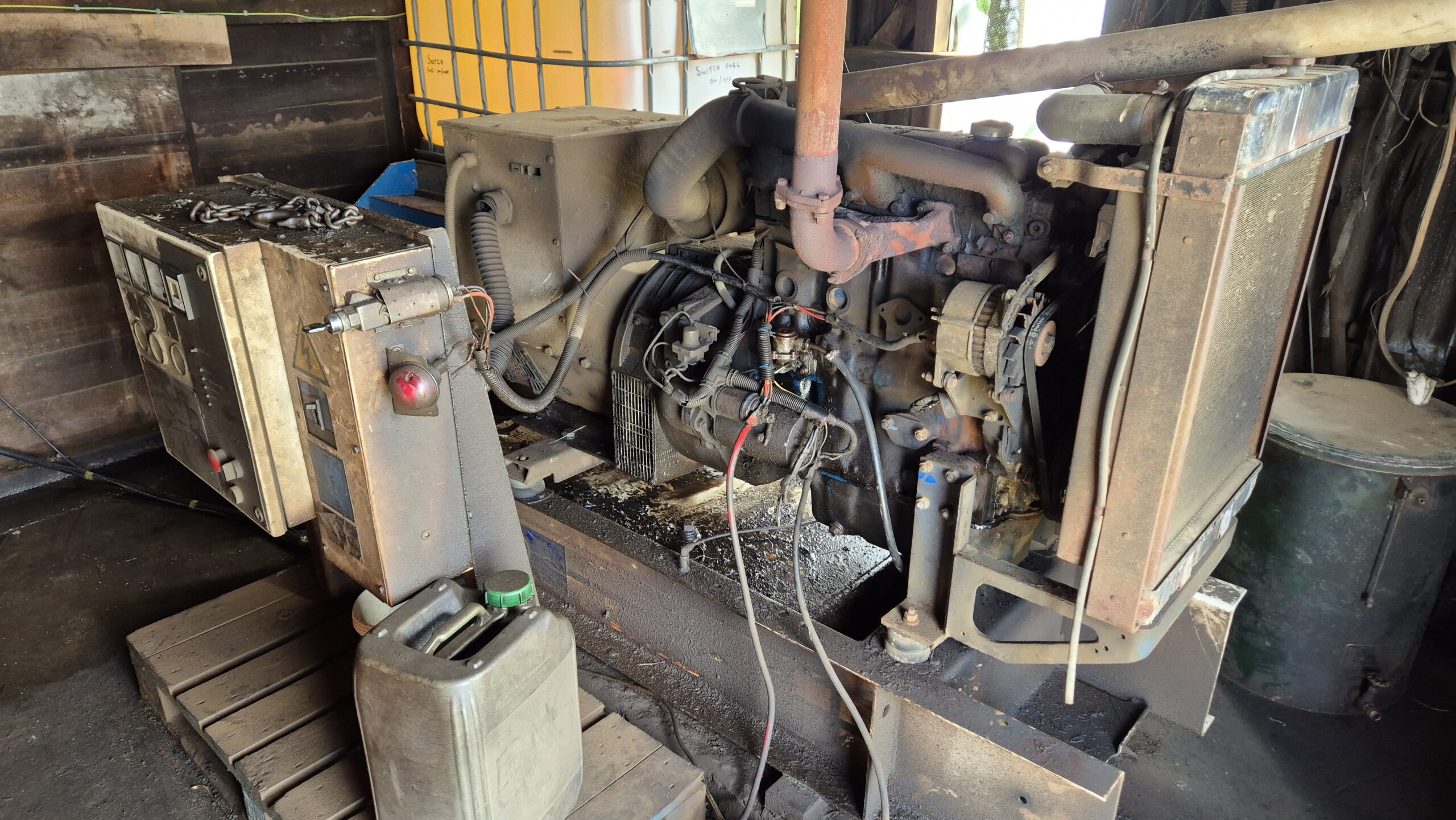
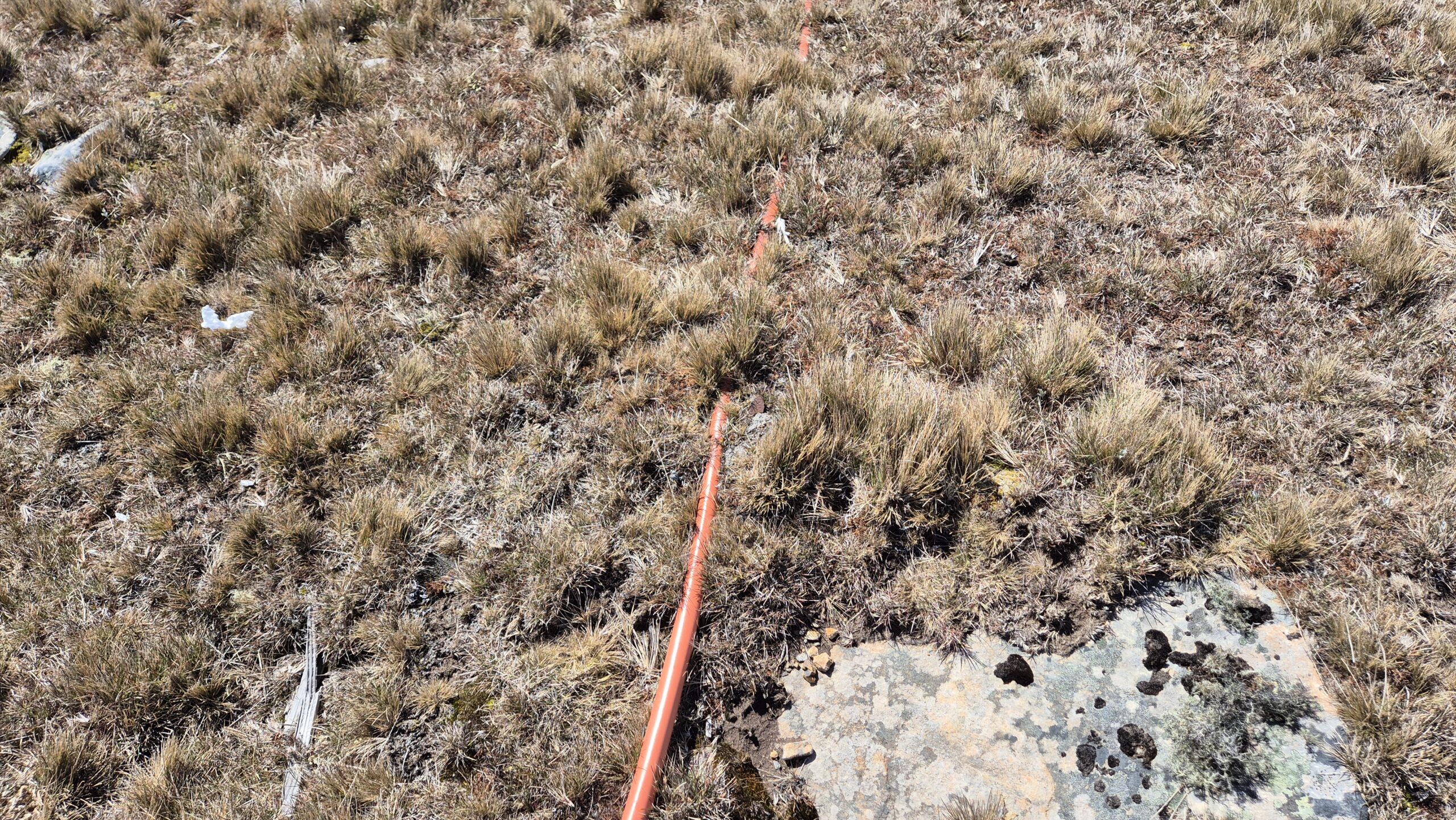
This was the original container installed on Mt Maria in the late 1980s to hold the FM radio transmitter. It was powered by a generator located at the bottom of Mt Maria in Port Howard and connected to it by a rather long power cable!
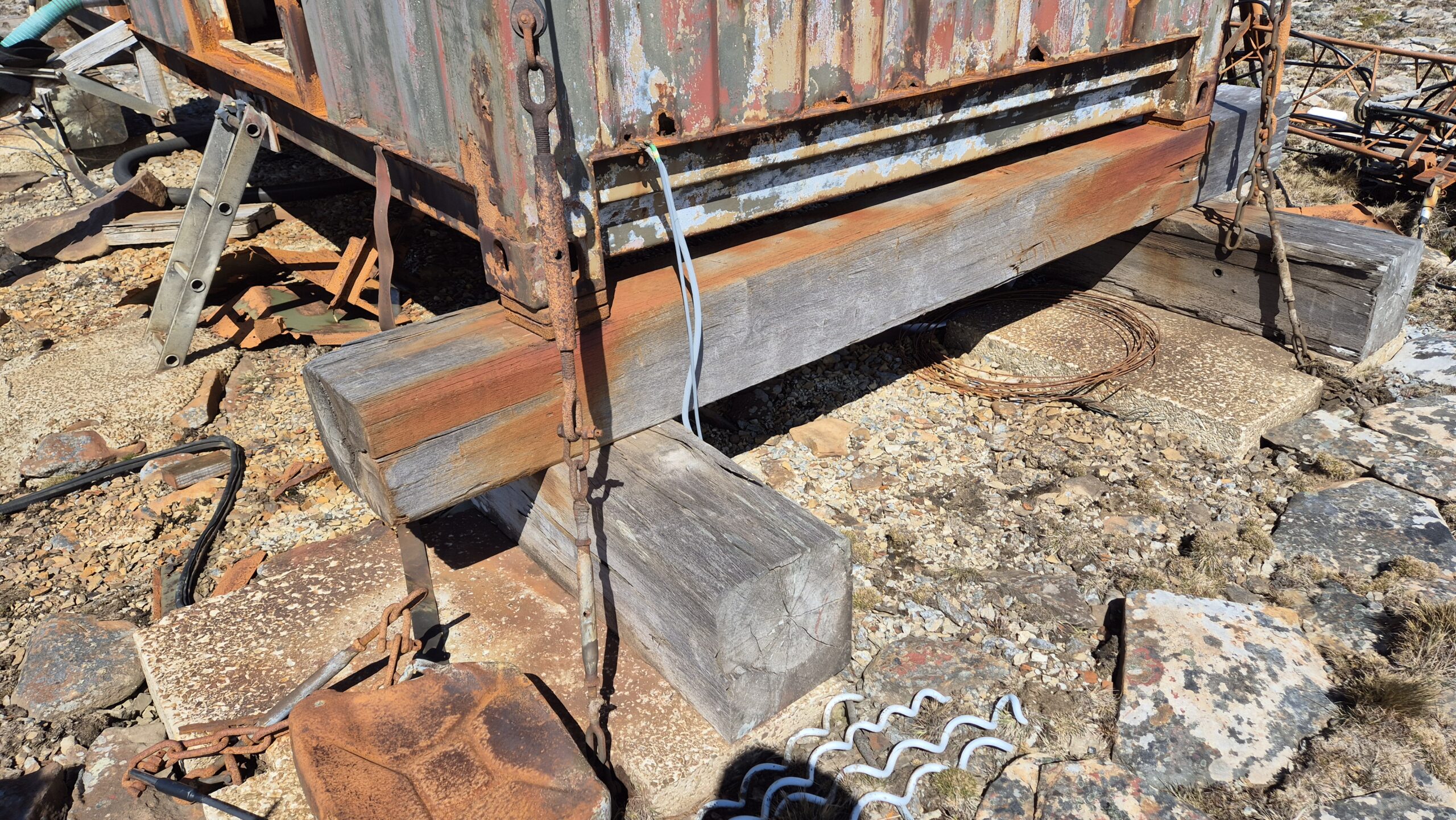
It’s a small world in the Falklands. On my trip out to Volunteer Point, my guide, Carrot, told me an anecdote that occurred many years ago. He and Bill Pole-Evans needed to lift the cabinet off the ground to prevent snow drifts from entering the cabin, so they installed six wooden blocks. This must have been in the early 1990s, as this cabin was abandoned in the late 1990s.
The kitchen area is just as it was left when it was abandoned in the 1990s – a little like the Mary Celeste.
The abandoned generator in Port Stanley.
The generator power cable goes all the way up Mt Maria from Port Howard.
Two ‘new’ now rusty containers containing the original BFBS VHF television transmitter and the FM radio transmitter installed in the 1990s.
These two containers were abandoned in 2014, when FIG deemed them too expensive to upgrade. This would certainly be the case today, as everything needed to be taken to the top of the mountain would have to be transported by helicopter.
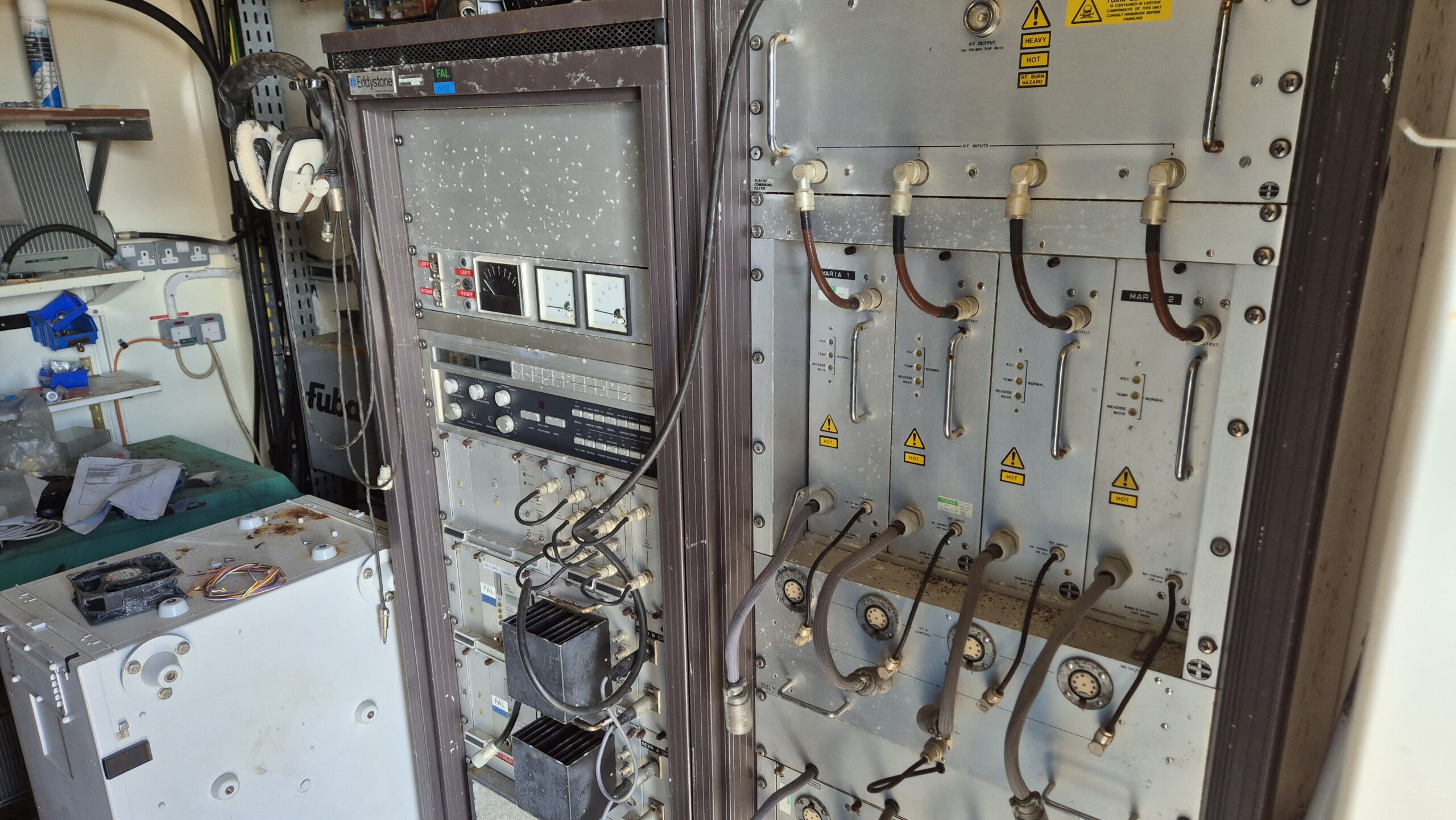
Of course, what I wanted to see was what remained of the equipment installed in the rusted containers. The picture below shows the EddyStone VHF FM transmitter in a sorry state. It’s an even smaller world than when I posted this picture on Facebook, and an old colleague of mine, Dale, G3XBY (he’s a radio amateur), who spent his career working for EddyStone Radio in Birmingham, spotted the image and said, “This takes me back! We stopped making the 7600 series sometime before 2000. Is it still working? The current series is 3 generations on and is keeping Eddystone going.” No, it’s not working, Dale!
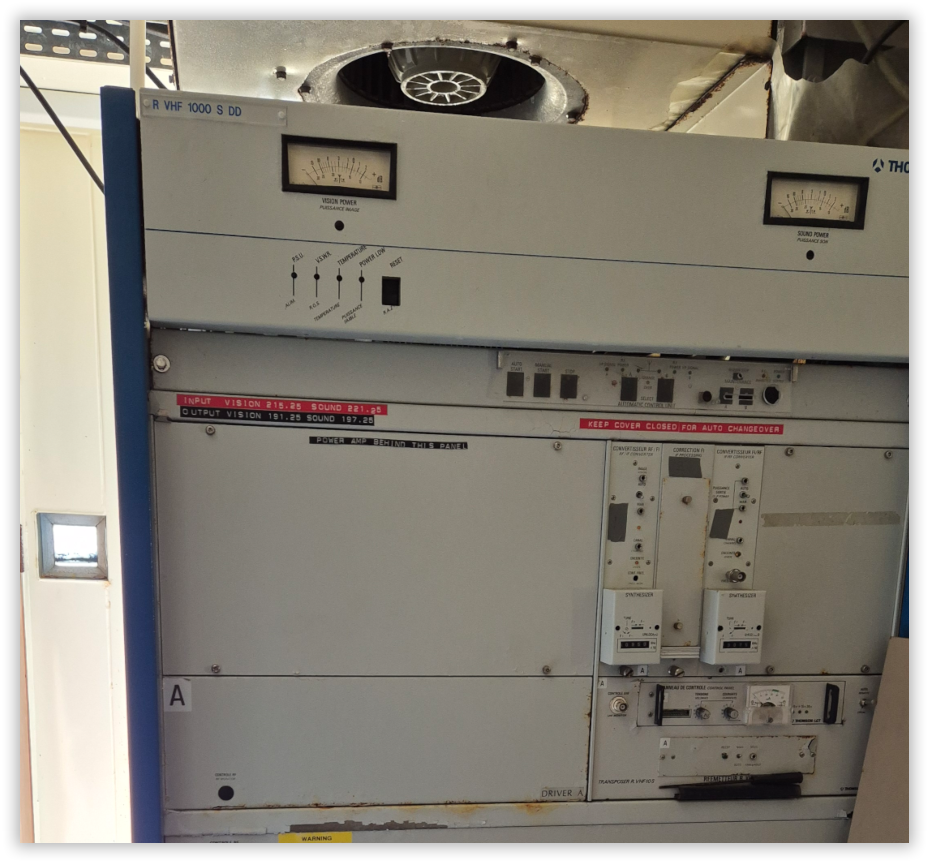
This is the BFBS VFH TV Thomson transmitter.
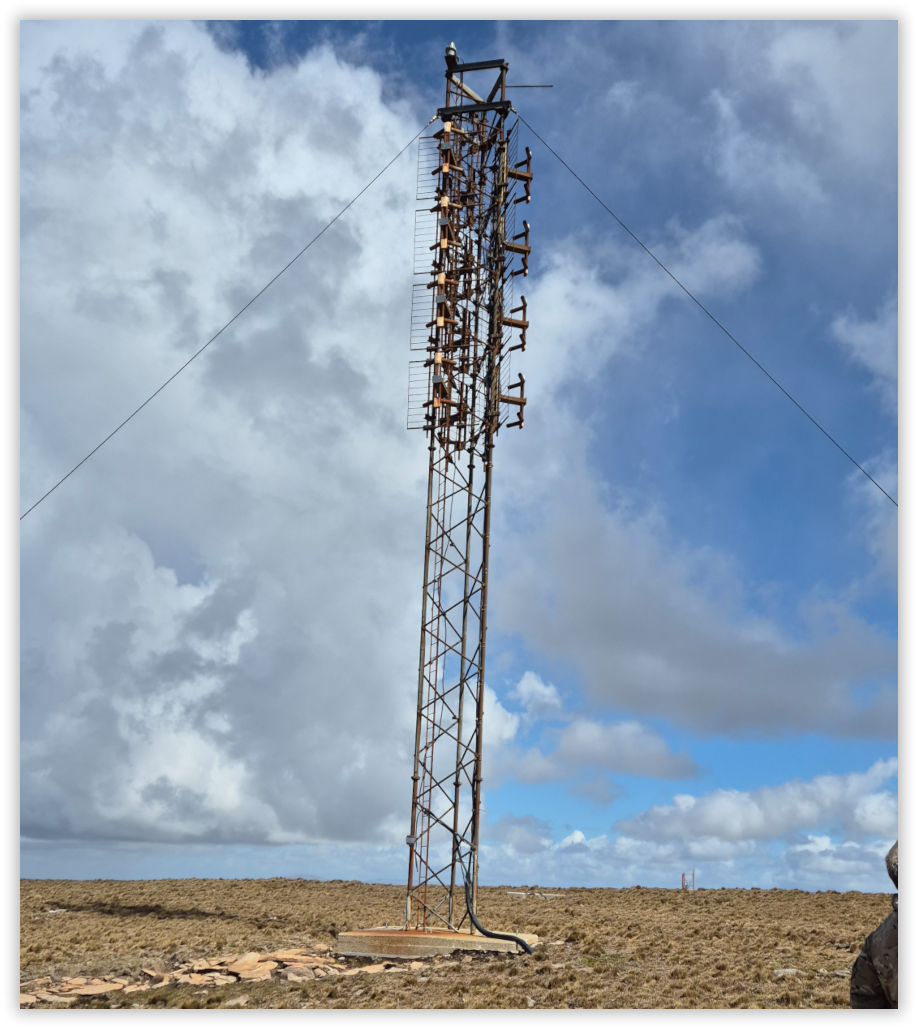
It looks like the transmitter mast will crash to the ground soon, as a couple of the guy cables are now broken.
On the day, the weather was just fantastic, and the views from the top of Mt Maria were just fantastic.
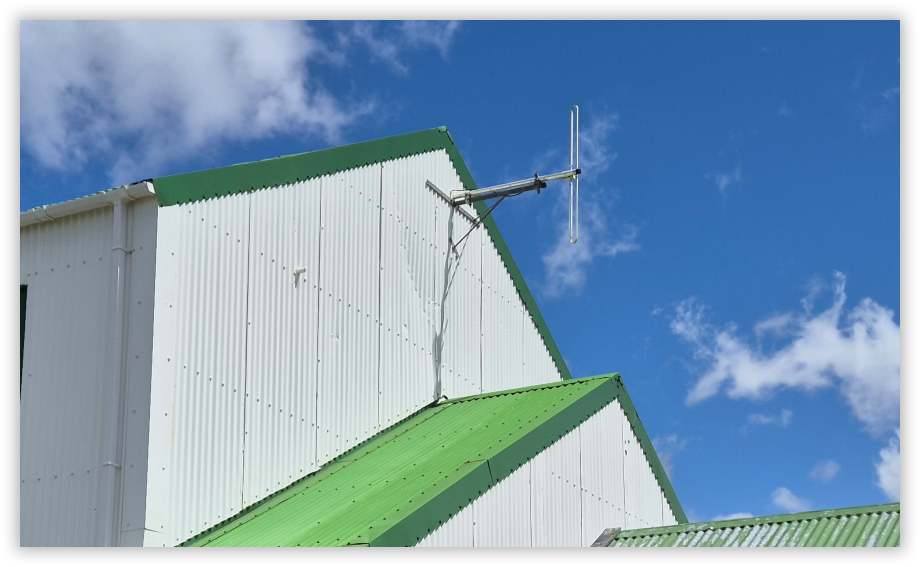
This is KTV’s FM radio transmitter antenna installed in the ‘Old Bunk House’ in Port Howard in 2014, before it was converted to the Maria Motel. Port Howard is a great place to visit in its own right, and I’d certainly recommend hopping on the ferry.
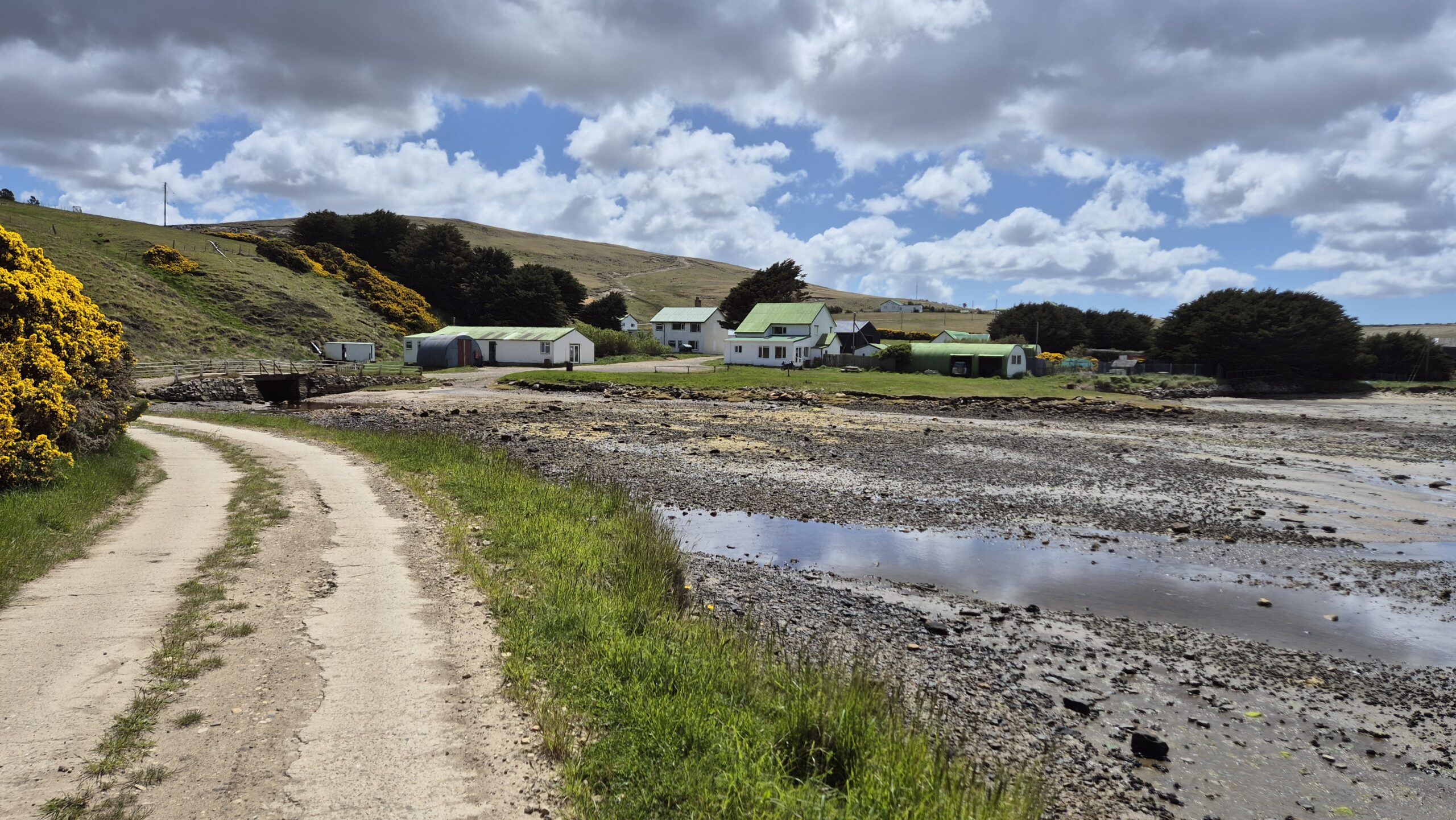
Back to wildlife – Whale Point
The trip out to Whale Point was one of the highlights of my trip and, in my opinion, was even better than the visit to Volunteer Point. Yet again, it involved a long off-road drive to get there.
We did manage see some dolphins while there, but they were a long way off, unfortunately.
However, there were plenty of penguins and elephant seals!
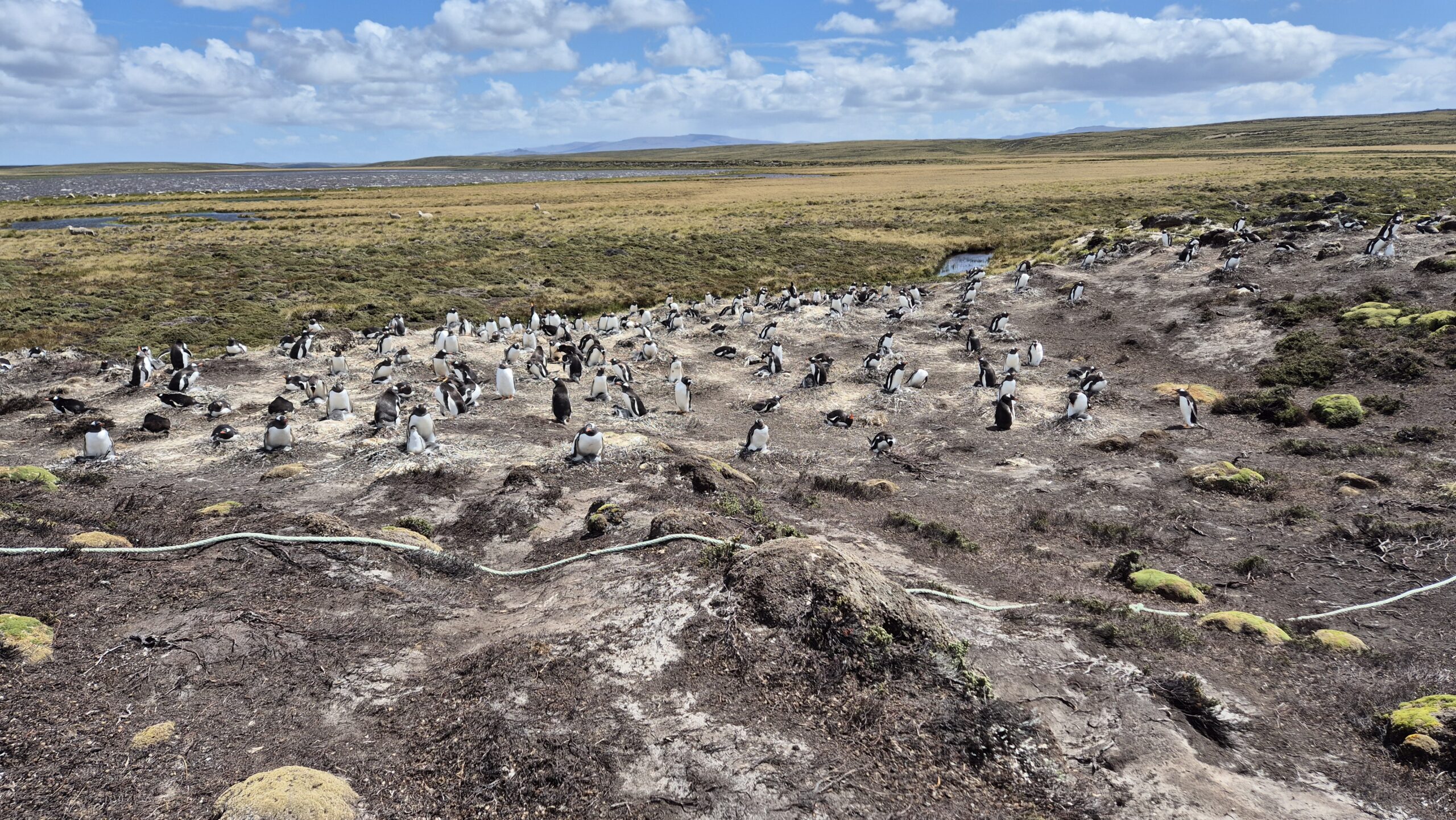
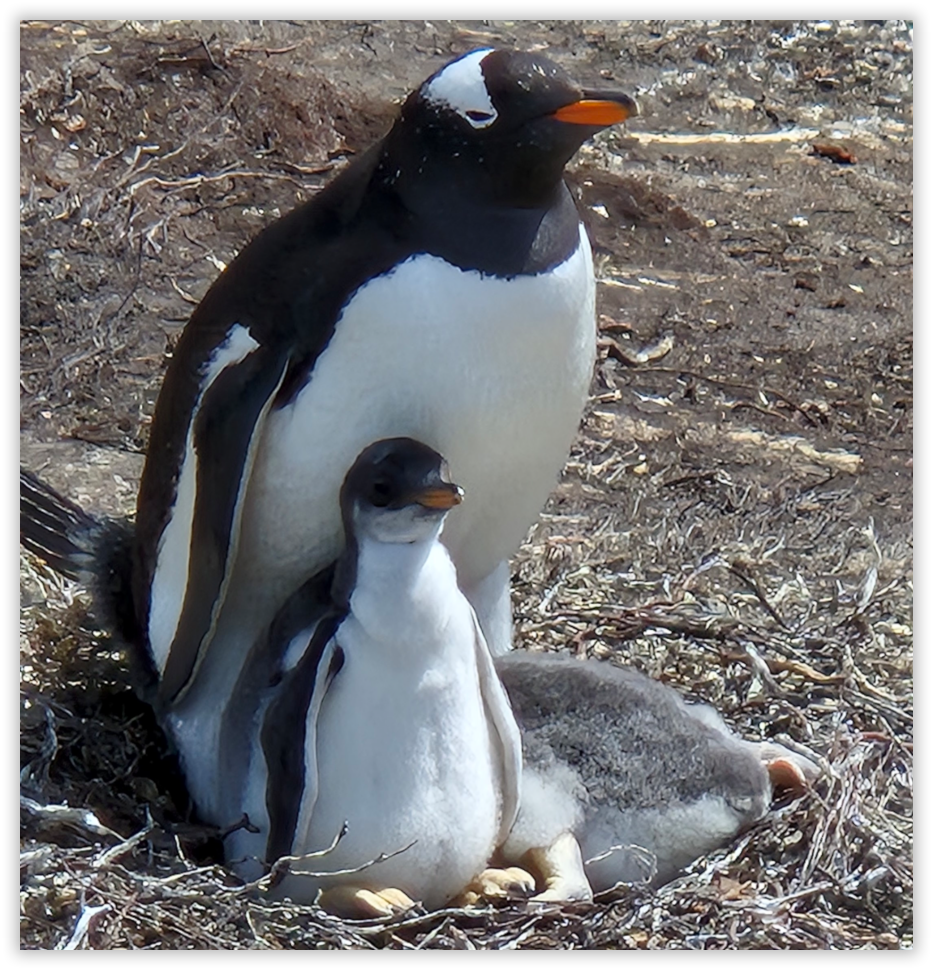
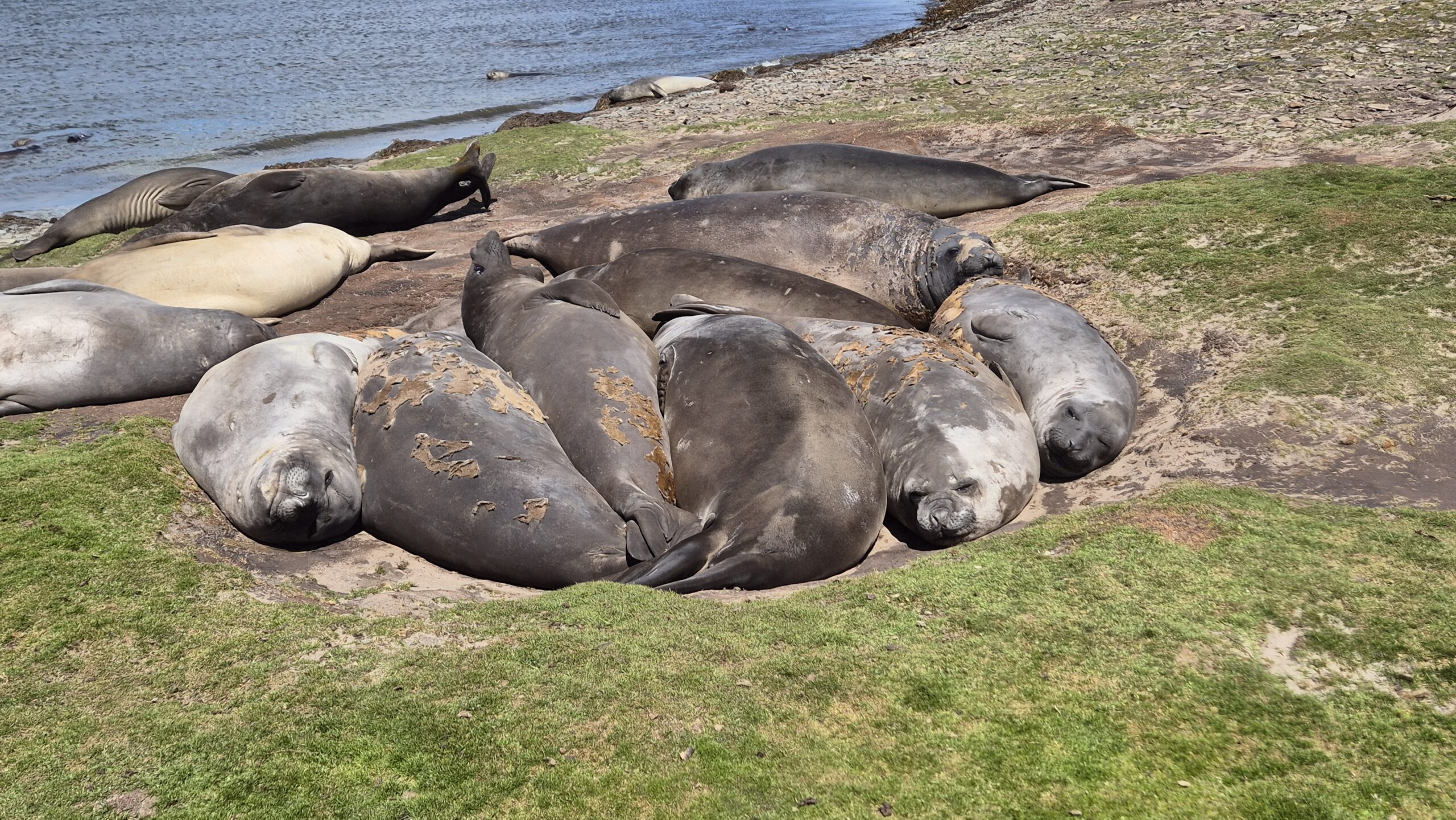
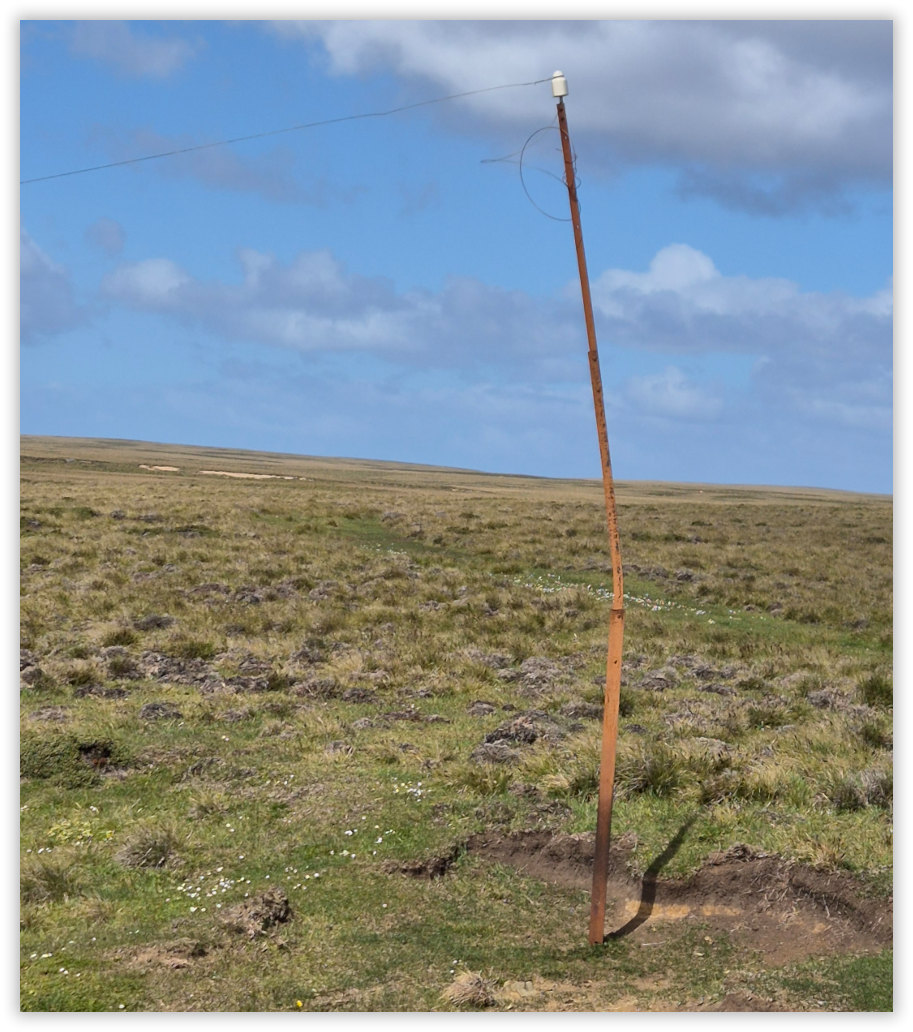
I can’t seem avoid telecommunications, I’m afraid. Although the remains of the old manual, magneto telephone, human switchboard operating telephone network can be seen in some parts of the Falkland Islands that were used until the 1970s, I was surprised to see an example of one still with remnants of the copper cable seen on the way to and from Whale Point.
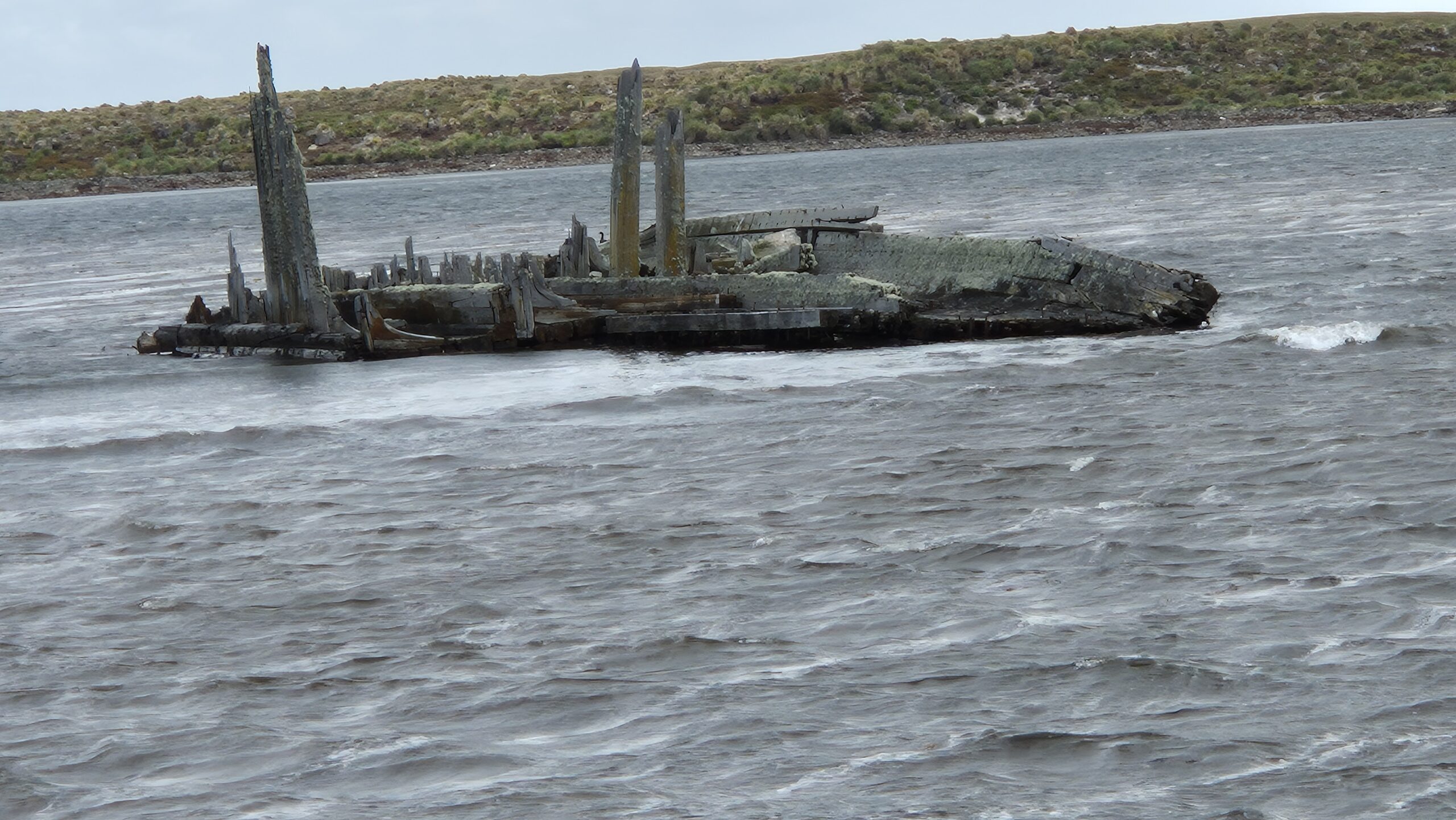
On her maiden voyage from New York to San Francisco, the St Mary was severely damaged after being rammed near Cape Horn. Attempting to reach shelter and repairs in the Falklands, she ran aground on rocks off Whale Point on 10 August 1890 and was wrecked.
How can I not mention Starlink?
As would be expected, Starlink came up in every interaction and in every one-on-one meeting I had during my visit. The latest count of VSAT licenses issued by the Communications Regulator now appears to have topped 1,000. Bearing in mind that there are only 1,500 households in Stanley, this is a high number. I would expect that every household in Camp is now using Starlink.
I did see many individuals who had yet to start using Starlink, as they didn’t use the Internet too much, but this will undoubtedly change with grandchildren’s pressure in the coming months! The legalisation of Starlink usage has most definitely been transformational for the islands, and everyone is expecting significant changes to the Falkland Islands’ telecommunications landscape going forward.
More practically, my visit not only allowed me to pontificate about telecommunications, but I also helped install a Starlink antenna in Stanley. Yep, I got my hands dirty, and no, I didn’t fall off the ladder. As would be expected, it took less than an hour and worked the first time.

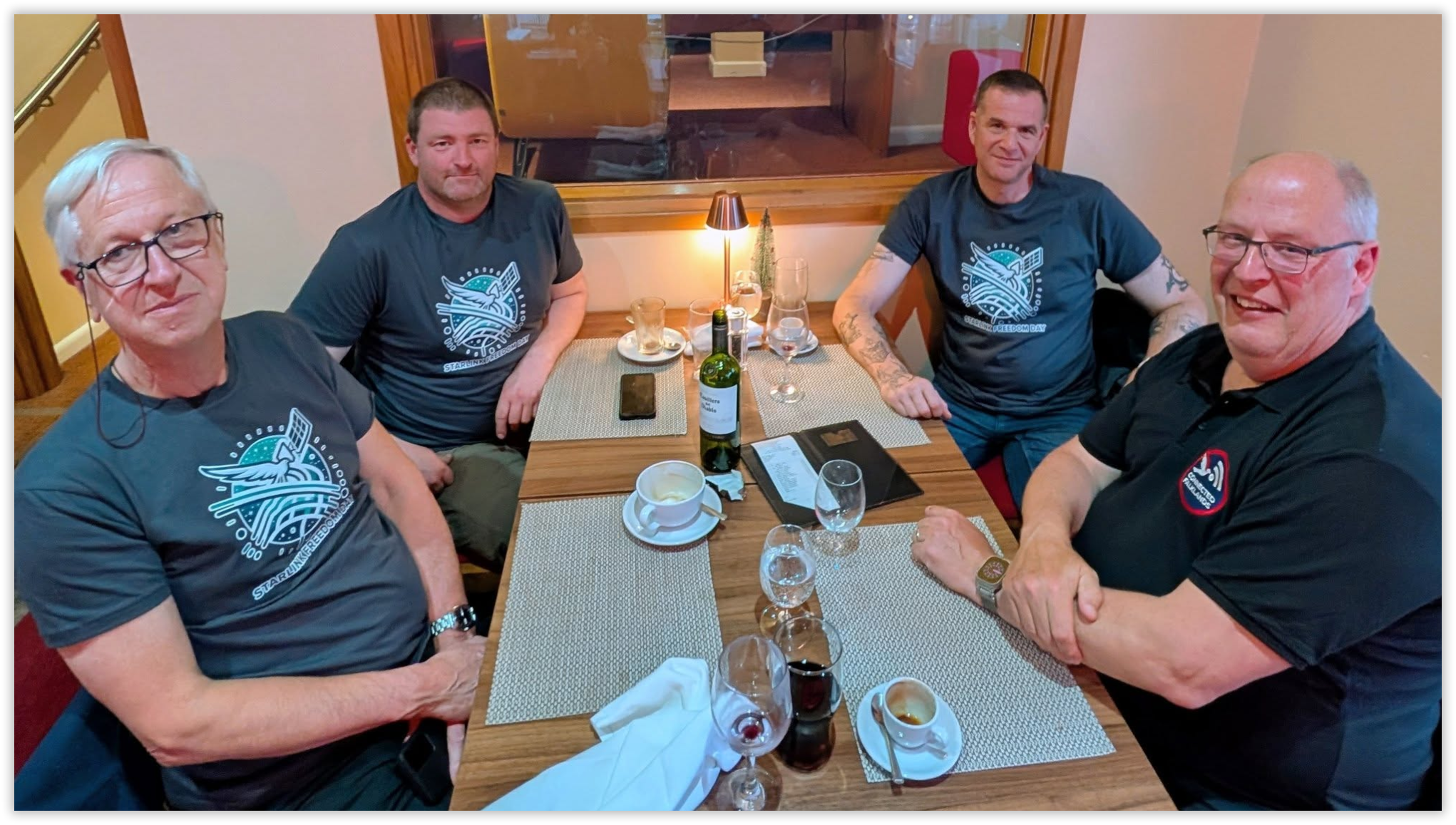
The Starlink Petition Group, Glynn, Simon, Brian, and myself, did manage to get together for a meal at the Malvina Hotel one evening, and we all had a fine time.
Cruise ship
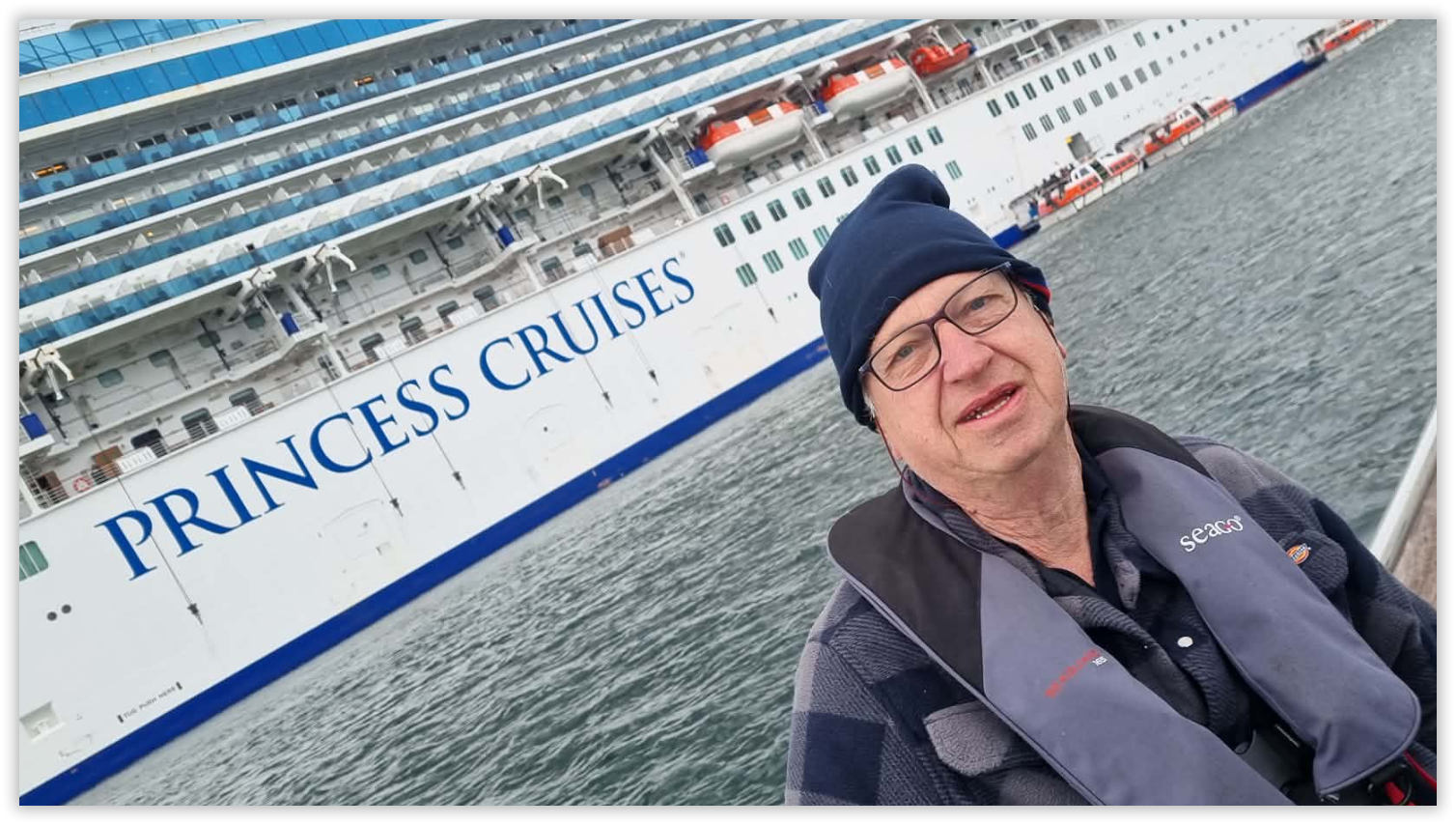
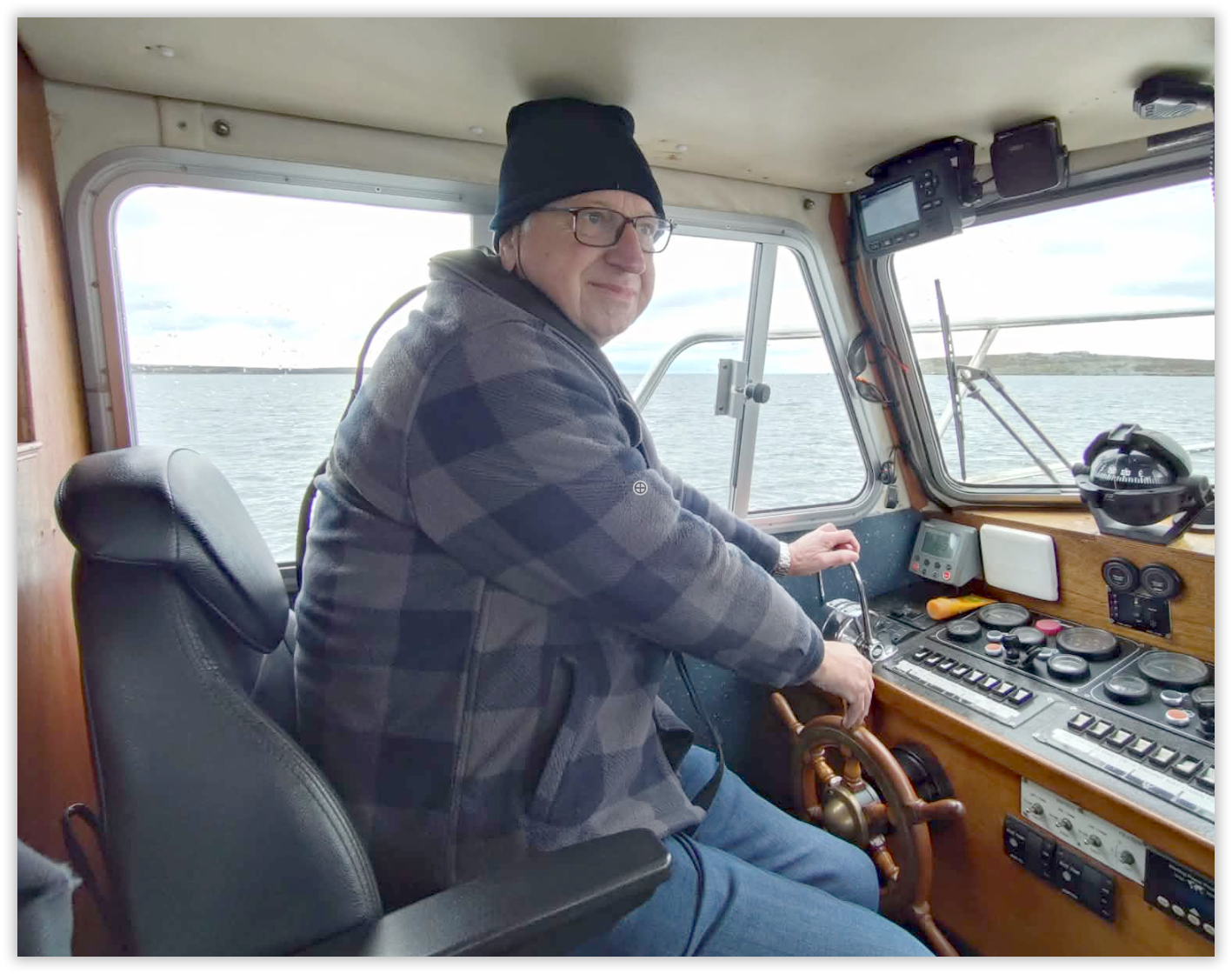
I had the privilege of joining the pilot boat taking customs staff out to the visiting cruise ship, Sapphire Princess, with a capacity of 2,670 passengers, when it arrived in Stanley on December 15th 2025. Boy, was that ship big!
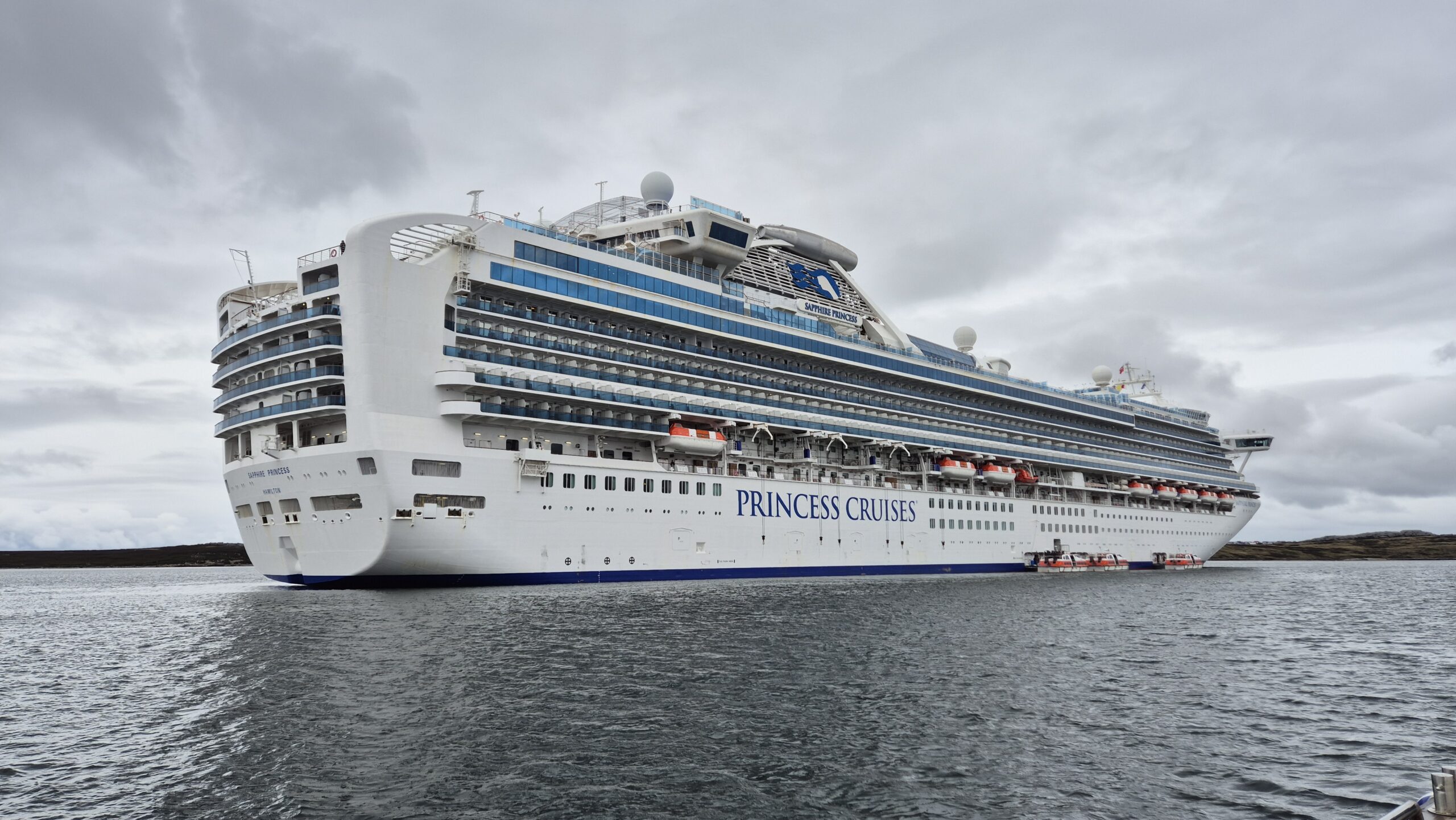
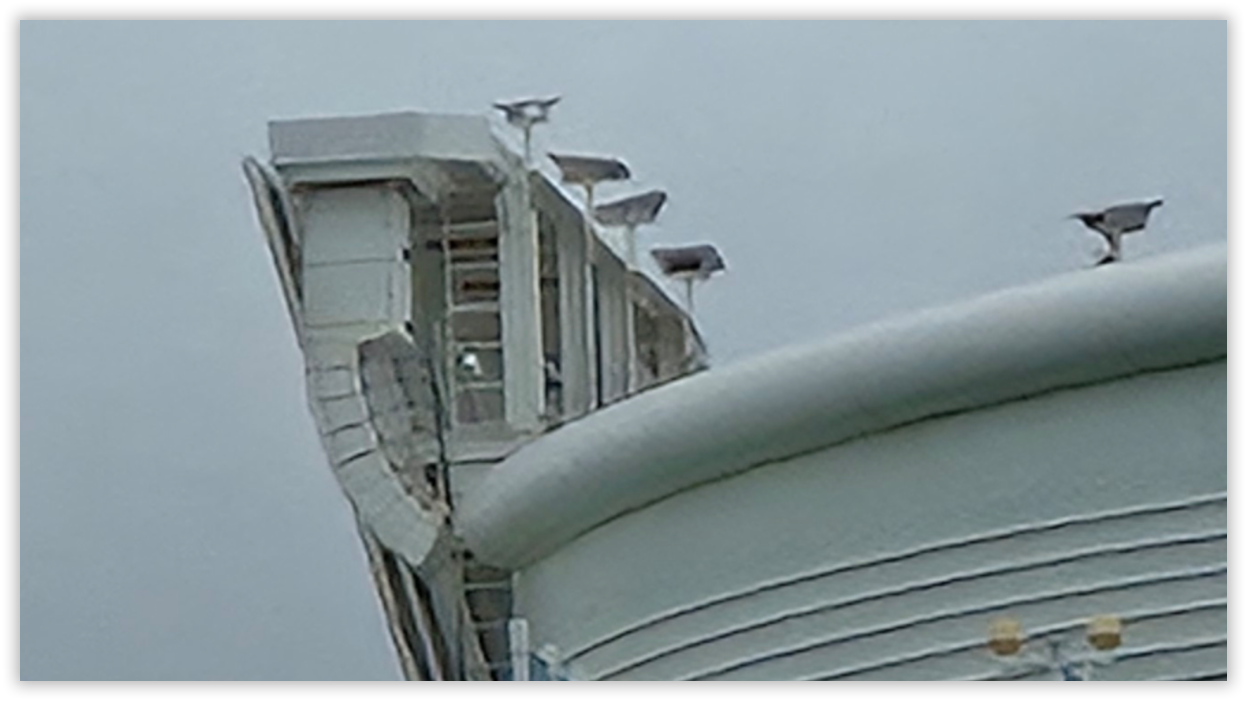
Guess what these antennas atop the Sapphire Princesses’ bridge are connected to? (Starlink, of course).
We monitored download speeds on a Starlink terminal in Stanley while the Sapphire Princess was visiting and were pleased to confirm that there was no deterioration in performance while the ship was at anchor. This is particularly notable given that the number of passengers on board was nearly equal to the entire population of the Falkland Islands! This observation stands in stark contrast to claims made by the CEO of Sure South Atlantic during his visit to the Falkland Islands in March 2025, when he stated: “If all of Stanley switched to Starlink, then speeds would reduce below 10 Mbps.”
Passengers aboard the Sapphire Princess enjoy high-speed broadband throughout their voyage, so it comes as quite a surprise to them that they are unable to use Starlink once they step ashore in Stanley—even though they have been told that Starlink use is now legal in the Falklands. This issue arose repeatedly in my one-to-one discussions, with many struggling to understand why this restriction exists, particularly given that cruise visitors represent such a significant source of revenue for the islands. The prevailing view was that this issue should have been addressed and agreed with Sure SA as part of the broader Starlink negotiations.
So, what connectivity is actually available to cruise ship passengers when they arrive at the jetty in Stanley? As I understand it, Sure has upgraded the jetty visitor centre hotspot and connected it to its OneWeb LEO service. Visitors can obtain a free half-hour access card, but this can only be used at the jetty hotspot and not at any other hotspot in the islands—an arrangement that is far from ideal from a visitor-experience perspective.
Remarkably, on the day of the Sapphire Princess visit, the jetty shop had run entirely out of Sure access cards several days earlier. As a result, no passengers were able to access the internet at all while ashore.
Malvina Hotel broadband
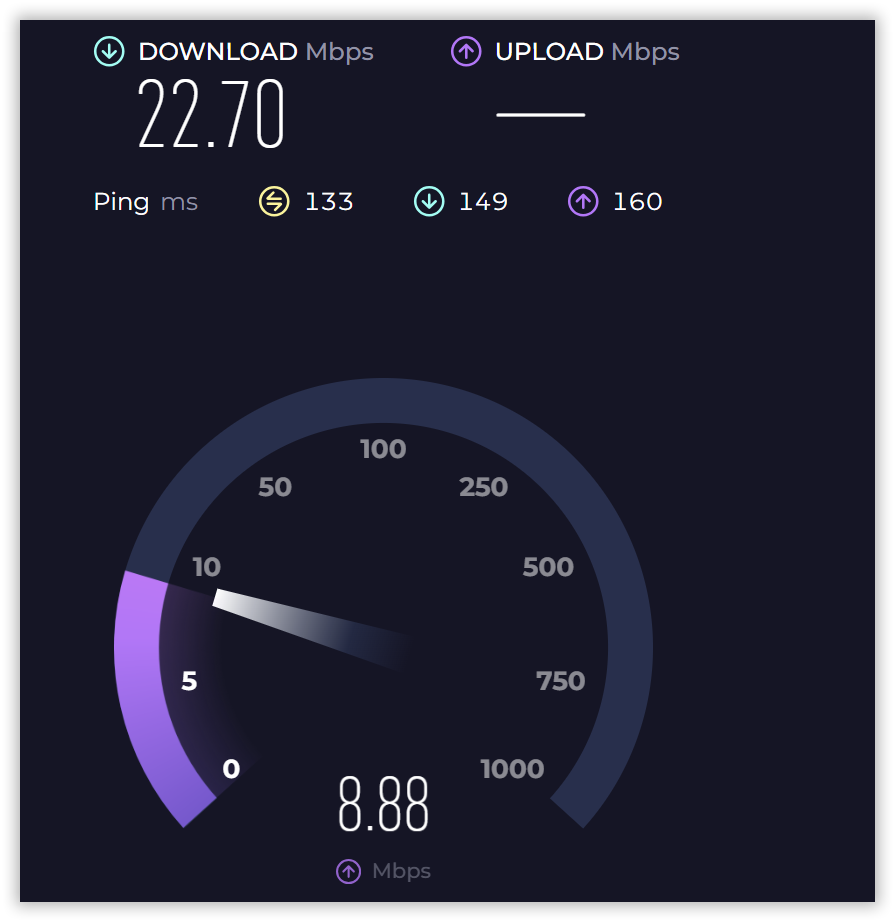
I stayed at the Malvina Hotel for a few days and was keen to experience their upgraded free Wi-Fi service that utilises Sure SA’s OneWeb LEO. I am pleased to report that its performance was transformational and reliable, with 20 Mbps download speeds and 8 Mbit/s upload speeds. This meant that, for the first time, I could reliably read my daily newspaper, The Times, over breakfast, which I have never been able to do during my previous stays at the hotel.
So, is this good news? The answer is both yes and no.
On the positive side, the hotel is now offering visitors to its facilities free one-hour Malvina Hotspot access cards, which is a welcome and sensible initiative.
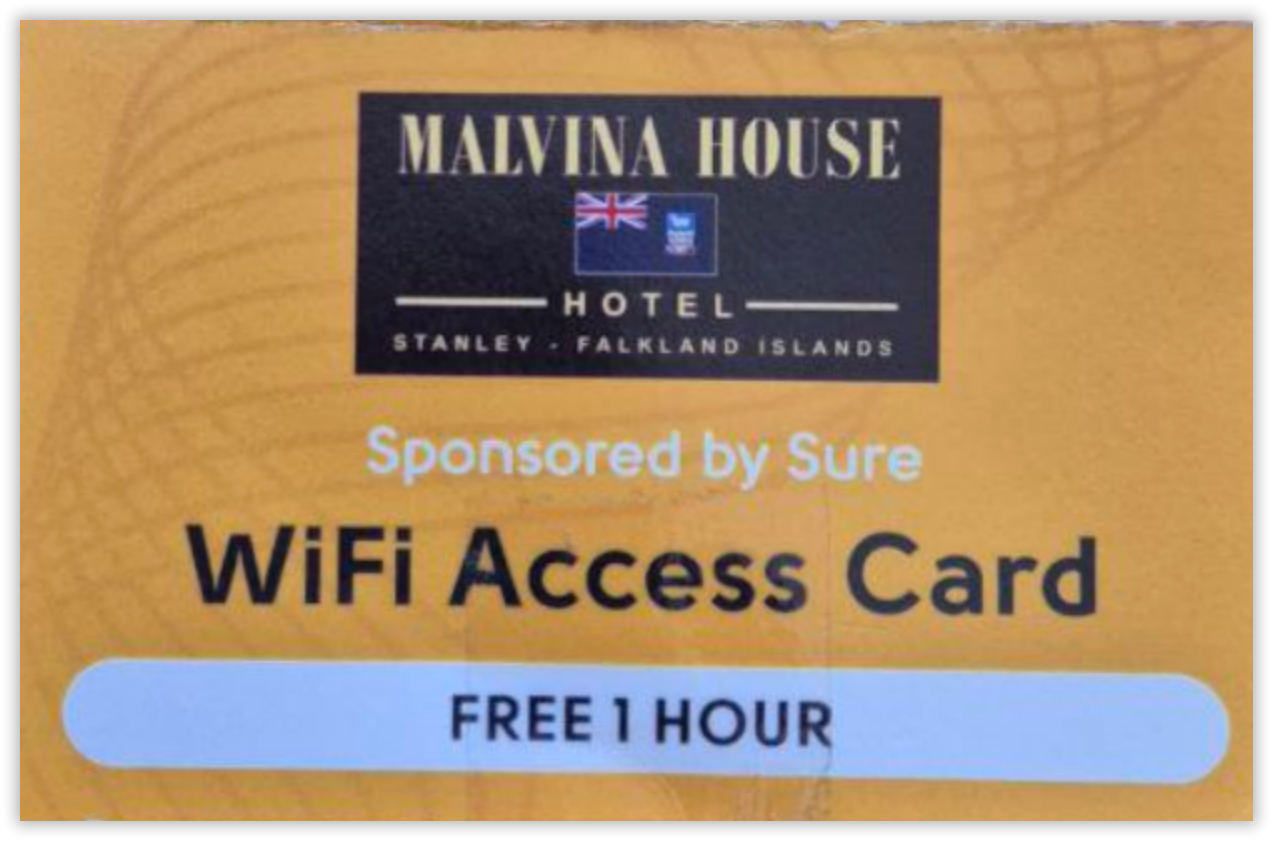
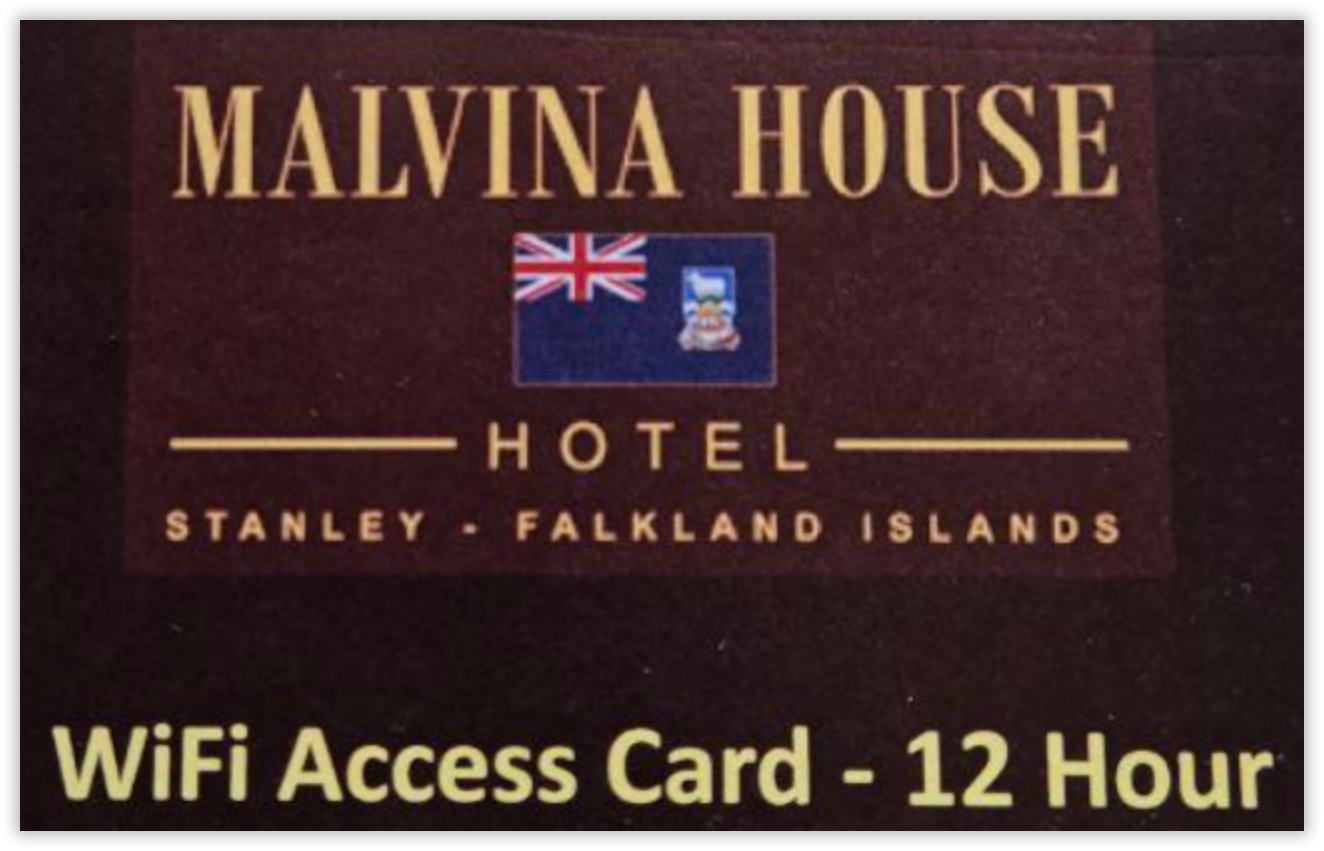
However, as a paying hotel guest, I reasonably expected complimentary, continuous internet access for the duration of my stay—particularly given that the hotspot is delivered via Sure SA’s OneWeb LEO service. This is not currently the case. Instead, the hotel issues 12-hour Wi-Fi access cards that remain strictly time-based.
As a result, guests must manually sign in and remember to sign out every time they use the internet, or risk unnecessarily consuming their remaining access time. Compounding the problem, there is no clear indication of how much time has already been used, making it difficult for guests to manage their connectivity effectively.
This raises a recurring and valid question: why are visitors still being offered a sub-optimal service that ultimately casts Sure SA’s OneWeb service in a poor light? This is particularly difficult to understand given that Sure SA now provides 100% quota-free broadband services to all islanders.
The Islands’ medium wave AM service.
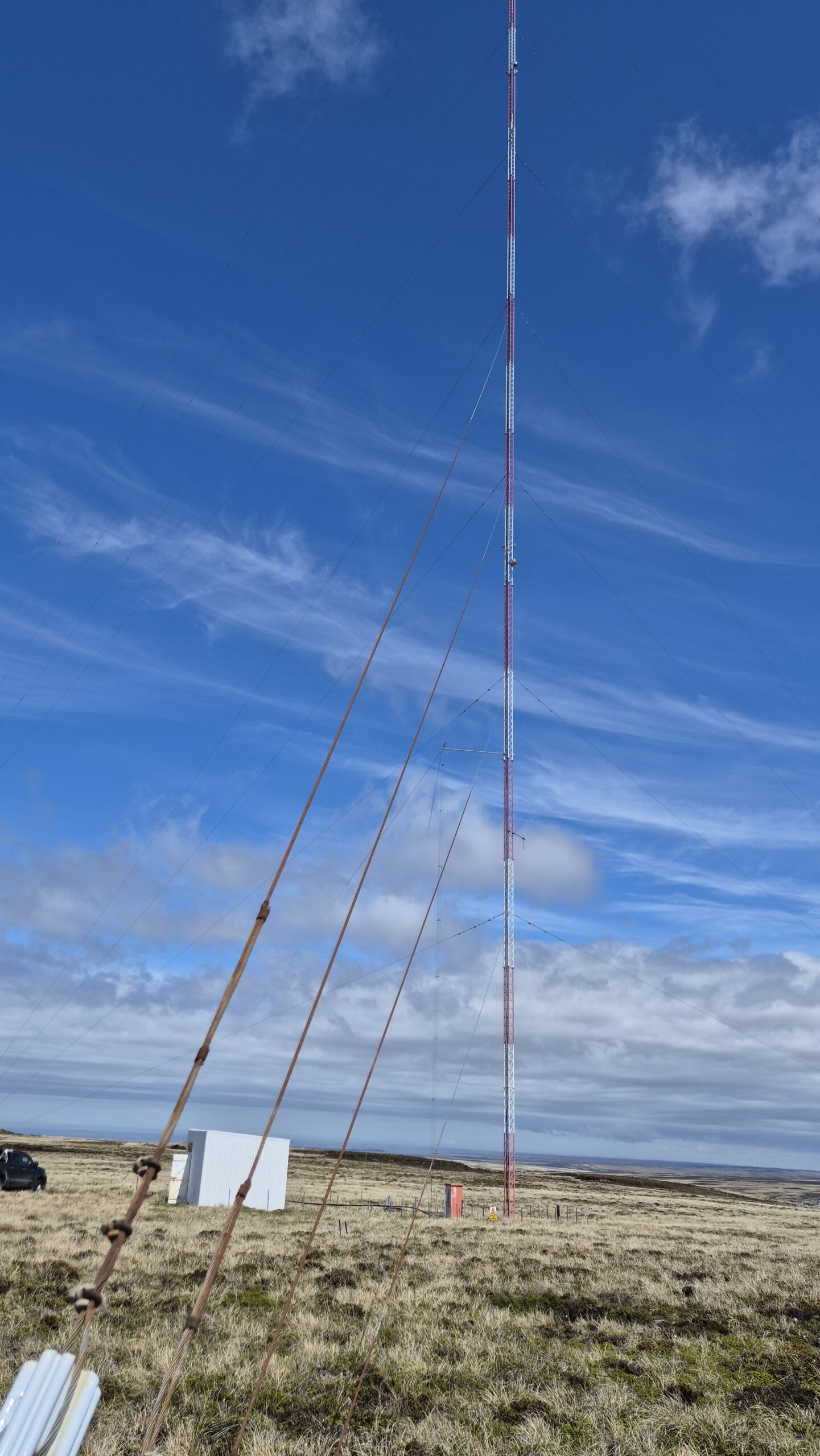
I had the opportunity to visit the Mt William, the location of the island’s 479 ft 530kHz AM medium wave transmitter. Its height is pretty spectacular when you get close up to it!
Battle of the Falklands ceremony
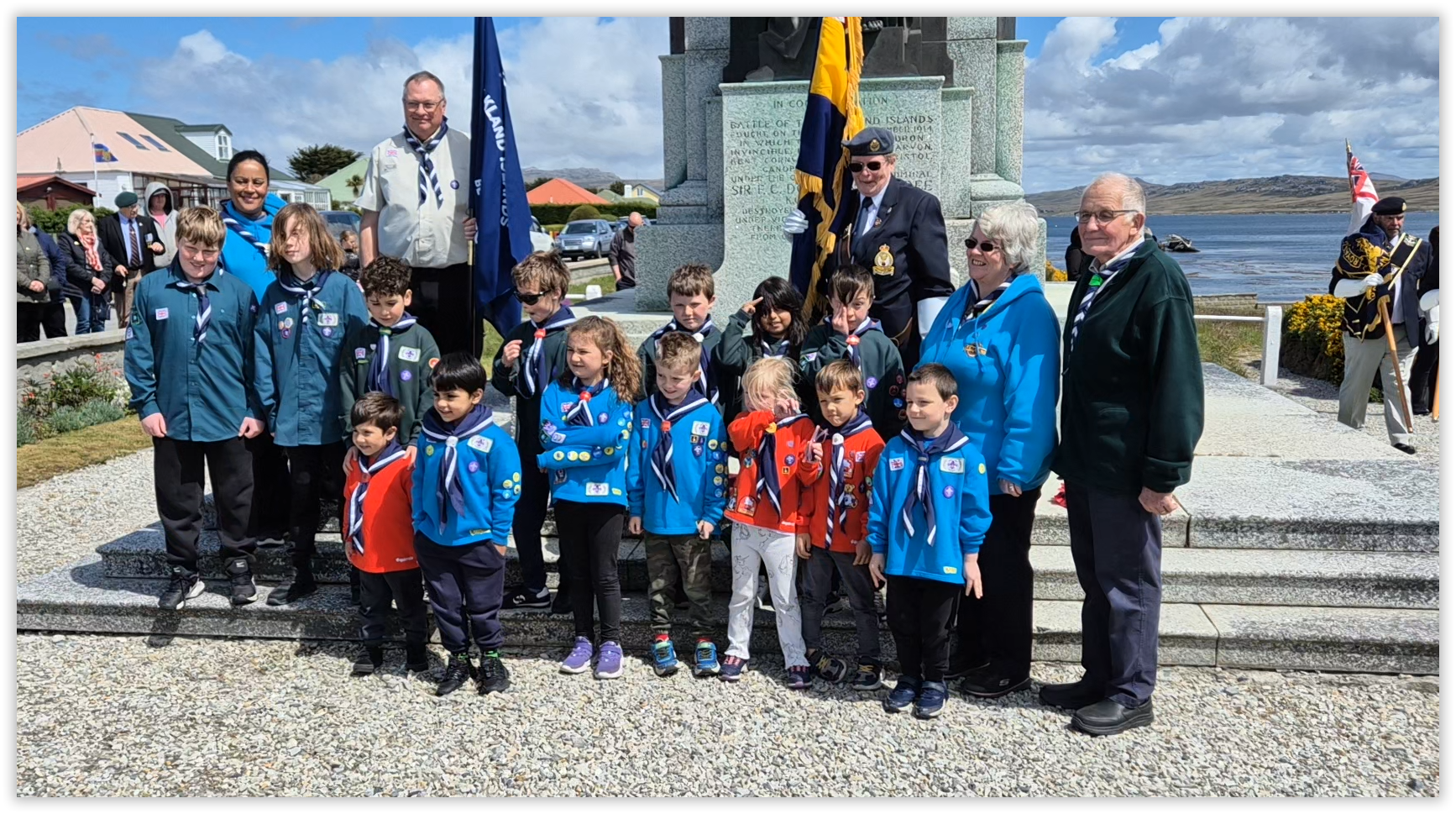
I attended the annual Battle of the Falklands Service. The Battle of the Falklands was a decisive World War I naval engagement on 8 December 1914 in which a British squadron defeated and largely destroyed the German East Asia Squadron near the Falkland Islands, securing British control of the South Atlantic.
Roundup
This was a rather different OpenFalklands post, but I hope you enjoyed it and found at least something of interest. I certainly had a good trip and would like to thank all those I spoke with about telecommunications matters and those who provided the many ‘once in a lifetime’ experiences. Happy Christmas and a prosperous 2026! I wonder what 2026 will bring?

Chris Gare, OpenFalklands December 2025, copyright OpenFalklands
That is not a good location for mounting your Starlink terminal. You’re losing field of view because of the structure.
Fascinating on many levels. Thanks for sharing, Chris. I could ask many questions about the current service in Stanley, but I will resist the temptation. I will say, I am amazed about the road to Volunteer Point. How is Carrot and other drivers going to compete with that? It was a unique experience, the cross-country drive.
Glad to hear you got back in time for Xmas.