
Executive summary
The arrival of Starlink in the Falkland Islands has rapidly reshaped the connectivity landscape, introducing faster speeds, lower costs, and, for the first time in years, meaningful consumer choice. While some view it as merely a temporary “sticking plaster,” the reality is more nuanced. This piece explores how Starlink’s direct-to-consumer model is disrupting the existing global telecommunications framework, the challenges this creates for incumbent providers, and the broader strategic implications for the Islands. Ultimately, it argues that Starlink is neither a complete solution nor a short-term fix, but an increasingly central component of the Falklands’ evolving connectivity strategy.

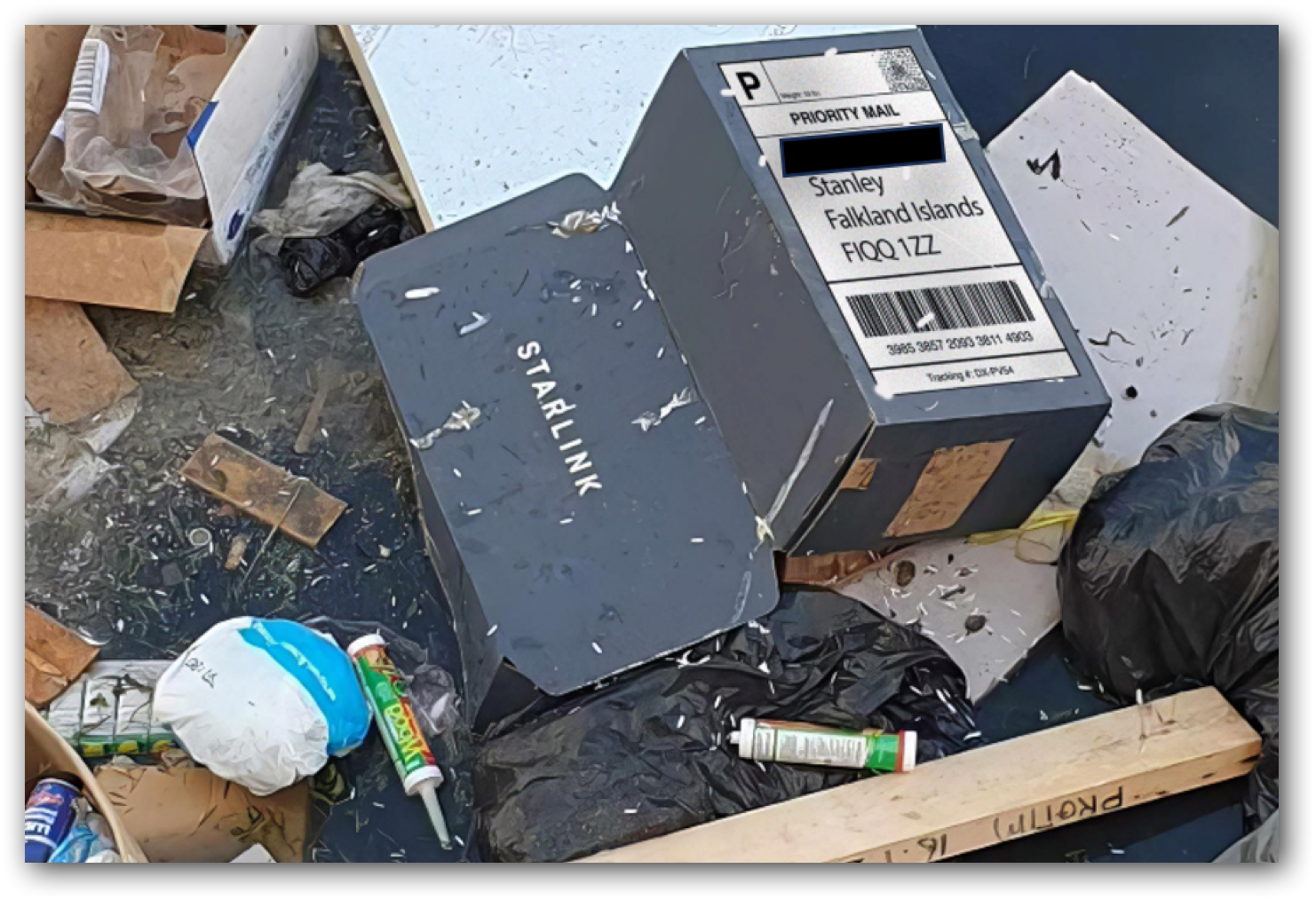
The arrival of Starlink in the Falkland Islands has transformed the connectivity landscape almost overnight. For many residents, it has delivered faster speeds, lower costs and an alternative to Sure Falkland Islands’ (Sure) unlimited 5 or 15 Mbit/s broadband services. After years of reliance on a single provider, that shift alone is significant, and the rapid uptake of individual VSAT licences (>1,200) reflects a clear public appetite for telecommunication changes in the Islands.
A view that has recently emerged – not sure from where this originated – is that Starlink represents only a “sticking plaster” solution, essentially a short-term fix rather than a sustainable, long-term strategy. To a limited extent, this critique has some validity, but it requires careful qualification. Starlink is not sovereign Falkland Islands infrastructure; it is owned and operated by SpaceX and is externally controlled. It does not integrate naturally with local telecommunications systems, nor does it contribute to the development of enduring, locally owned telecommunications assets within the Islands.
However, given current technological and geographic constraints, there is no realistic alternative for the Falkland Islands other than to use low Earth orbit (LEO) satellite broadband connectivity, whether through Starlink or, potentially, future systems such as Amazon Kuiper. In that context, describing Starlink as merely a “sticking plaster” is overly simplistic and wrong.
At the same time, Starlink’s underlying business model needs to be understood. It is, first and foremost, a direct-to-consumer service. Customers buy the equipment, activate it themselves, and deal directly with the provider, as is the case in the Falklands. That consumer model is deliberate: it bypasses traditional telecom operators and avoids the need for local intermediaries. While Starlink does work with partners in enterprise, maritime, and aviation sectors, its consumer strategy is explicitly designed to reduce the role of traditional local intermediaries, local companies, rather than collaborate with them. This may be a challenge for incumbent telecommunications providers, but it reflects a well-established pattern seen in many disruptive technology markets.
This has important implications for the Falklands. With over 1,200 VSAT direct licences already issued by the Falkland Islands Government (FIG), Starlink has not entered the market through a partnership; it has entered the market alongside and in competition with the existing provider, despite the existing provider’s exclusive communications licence.

This, in turn, highlights a key constraint: Sure’s current exclusive licence runs only until 31 December 2027. It seems unlikely that the company would commit to that level of capital expenditure without clear signals from the Falkland Islands Government regarding its future market position or the continuation of its exclusive licence beyond that date. The question, therefore, is whether the Falkland Islands Government and Members of the Legislative Assembly would consider such a strategy justified.
It is challenging to see how a traditional retail partnership model would be commercially viable, selling directly to consumers, taking into account Starlink’s now well-embedded presence among Falklands consumers. A similar question arises regarding business and enterprise services. These dynamics are not unique to the Falklands, but reflect broader global trends affecting incumbent telecommunications providers in the face of new market entrants.
Starlink introduced a model in which a substantial share of the Falklands’ connectivity is delivered by a single external provider, with limited local integration or operational control. While this approach delivers clear and immediate benefits to end users, it also raises longer-term considerations around resilience, governance, and the balance between externally delivered services and locally anchored infrastructure. However, this situation is no different to Sure’s use of Intelsat as its sole backhaul geosatellite provider.
This reframes the view of whether Starlink could be considered only a “sticking plaster” solution. The question is no longer whether Starlink is sufficient on its own, but how it should fit into a broader, long-term communications strategy.
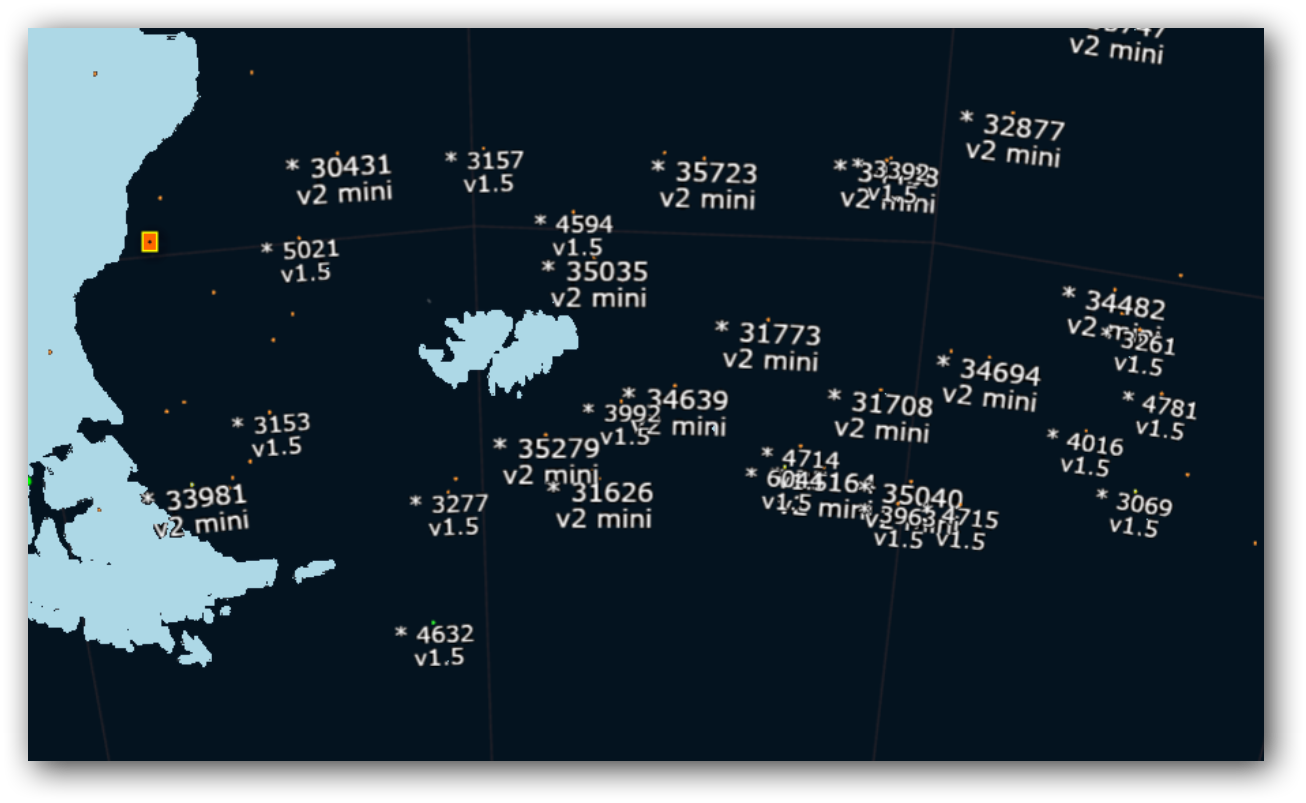
The above image shows the average number of Starlink LEO satellites near the Falkland Islands at any given time.
Conclusions
Starlink may not be a complete solution, and it does not remove the need for long-term planning or investment. But nor is it merely a “sticking plaster”. For the Falklands – and globally – it is rapidly becoming a foundational interconnectivity layer of connectivity, presenting both opportunities and challenges. The task now is to shape how that layer is used in the Falklands, ensuring that it supports resilience, competition and the long-term interests of the Islands as a whole.
Chris Gare, OpenFalklands, April 2026, copyright OpenFalklands
It’s interesting to see how quickly this is changing things for residents. The potential for remote work and education is really quite significant, isn’t it?