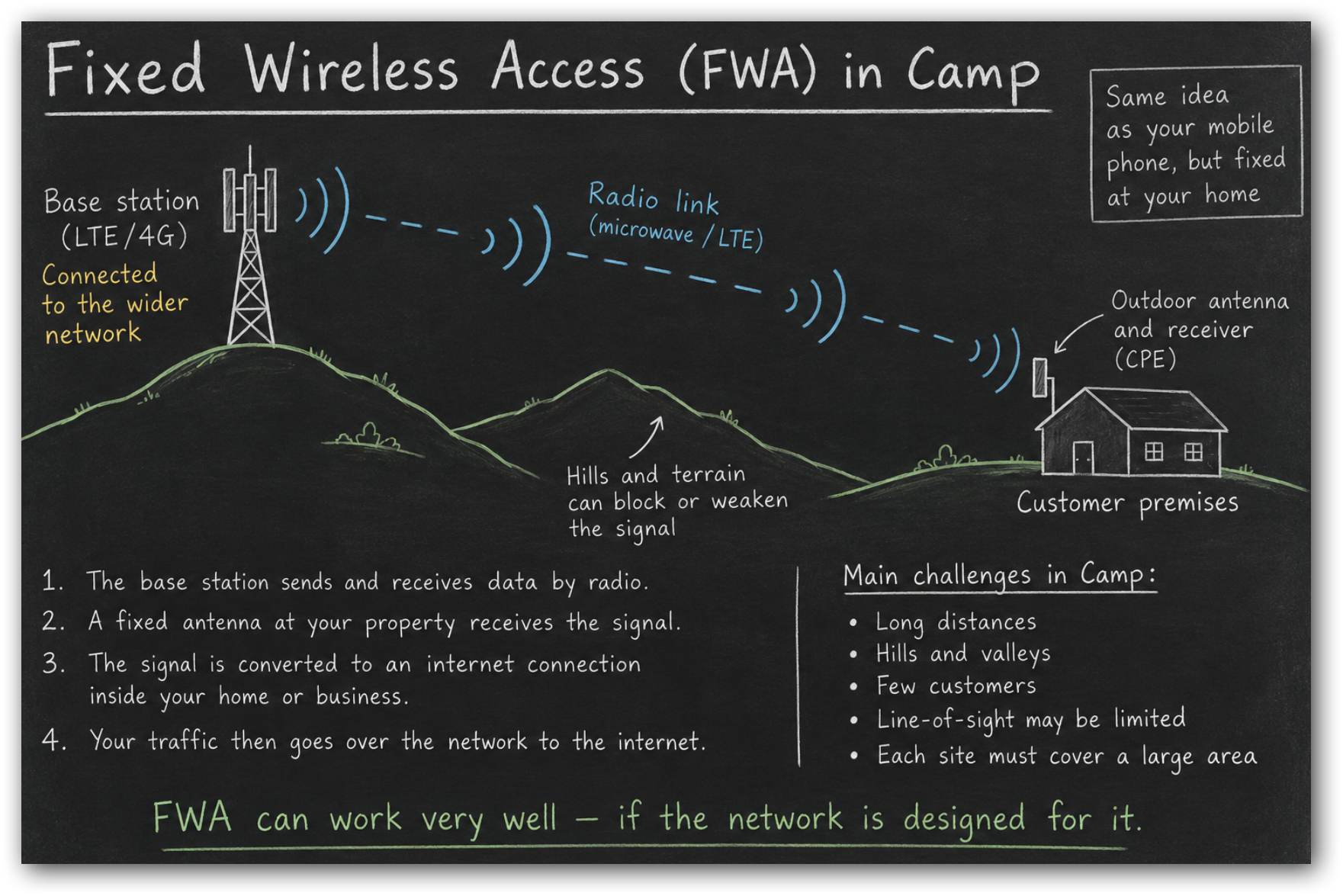
A recent post examined the continued use of 2G for mobile voice calls in the Falklands. An associated technology is LTE-based Fixed Wireless Access (FWA), which provides services to homes and businesses in Camp.
FWA has acquired something of a poor reputation in Camp. Mention wireless broadband to some Camp residents, and their reaction is likely to be shaped by years of experience with services that haven’t always been as reliable as they reasonably expected. But there is an important distinction.
FWA is not inherently unreliable. A properly designed FWA network can provide fast and extremely reliable broadband. The question is whether the network has been designed for the job it is now being asked to do. That distinction has become particularly relevant because St Helena has just announced plans for a major telecommunications upgrade which includes a new FWA broadband network.
What Is FWA?
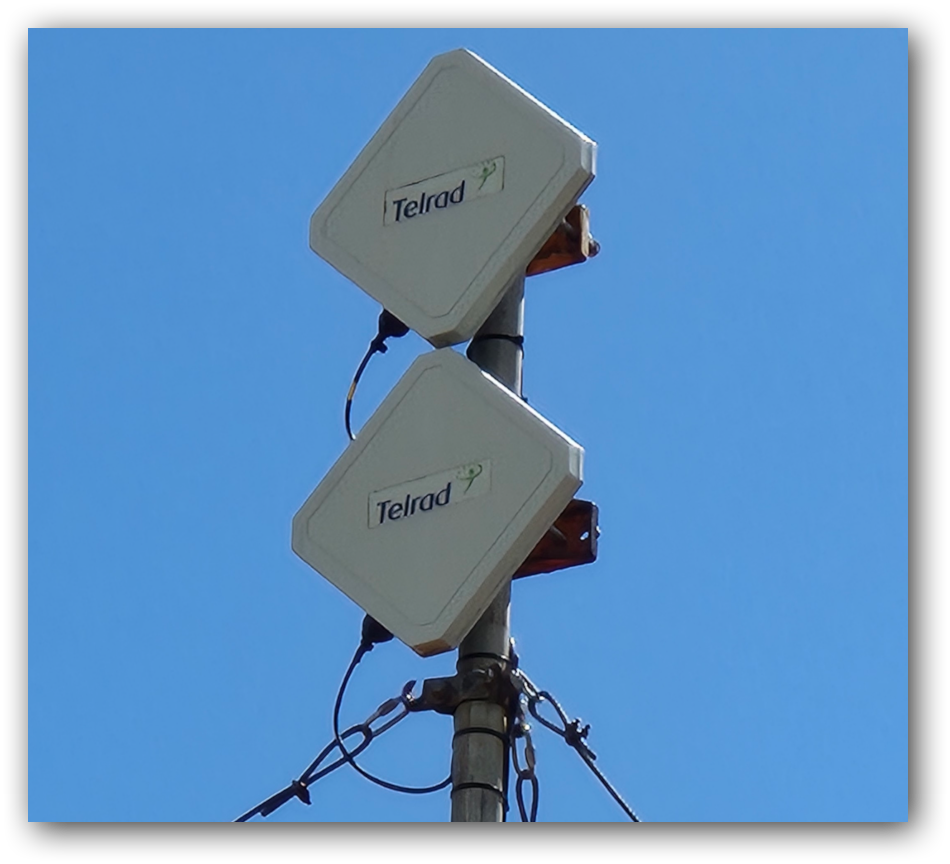
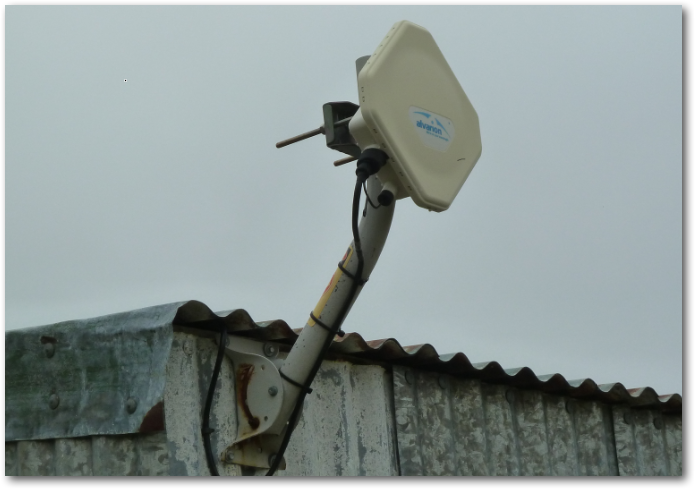
FWA is actually quite simple. Instead of running copper or fibre to a house, a base station communicates by radio with an antenna or receiver installed at the customer’s premises. The connection is “fixed” because both ends of the radio link remain in known locations. Modern 4G and 5G technology can provide FWA, and hundreds of megabits per second are perfectly achievable under the right conditions. Therefore, nothing about FWA is intrinsically second-rate. The important words are “under the right conditions.”
Camp Is a Difficult Place to Build a Wireless Network
We all know that Camp combines almost everything a radio-network designer would rather avoid: enormous distances, difficult terrain, very low population density, sometimes poor weather and isolated customers who may be many kilometres from the nearest 2G/4G base station. That makes installing additional base stations expensive, creating a strong economic incentive to cover as much territory as possible from each site.
That can work reasonably well when the objective is basic mobile voice coverage. A usable telephone call requires comparatively little network capacity and can continue to work at signal levels where a high-speed data broadband connection may already be unreliable.
Indeed, Sure’s own sensible mobile guidance acknowledges this distinction, explaining that in some locations a customer may have sufficient signal for a voice call but insufficient signal for mobile data.
Camp’s Network Has Evolved
Camp broadband was originally provided using now-obsolete WiMAX, while the mobile network was subsequently extended across significant parts of Camp using 2G. By 2015, both technologies were ageing, and an independent Cartesian review recommended replacing the WiMAX system with Long Term Evolution (LTE) and upgrading the mobile network. That was technically entirely sensible.
Sure’s accounts later described moving Camp customers from the old WiMAX system to a 4G-based FWA solution. But changing the radio technology doesn’t necessarily change the network’s geography and location of base stations. If LTE is installed principally at existing 2G sites, the distances, hills, valleys and locations of those sites remain much the same.
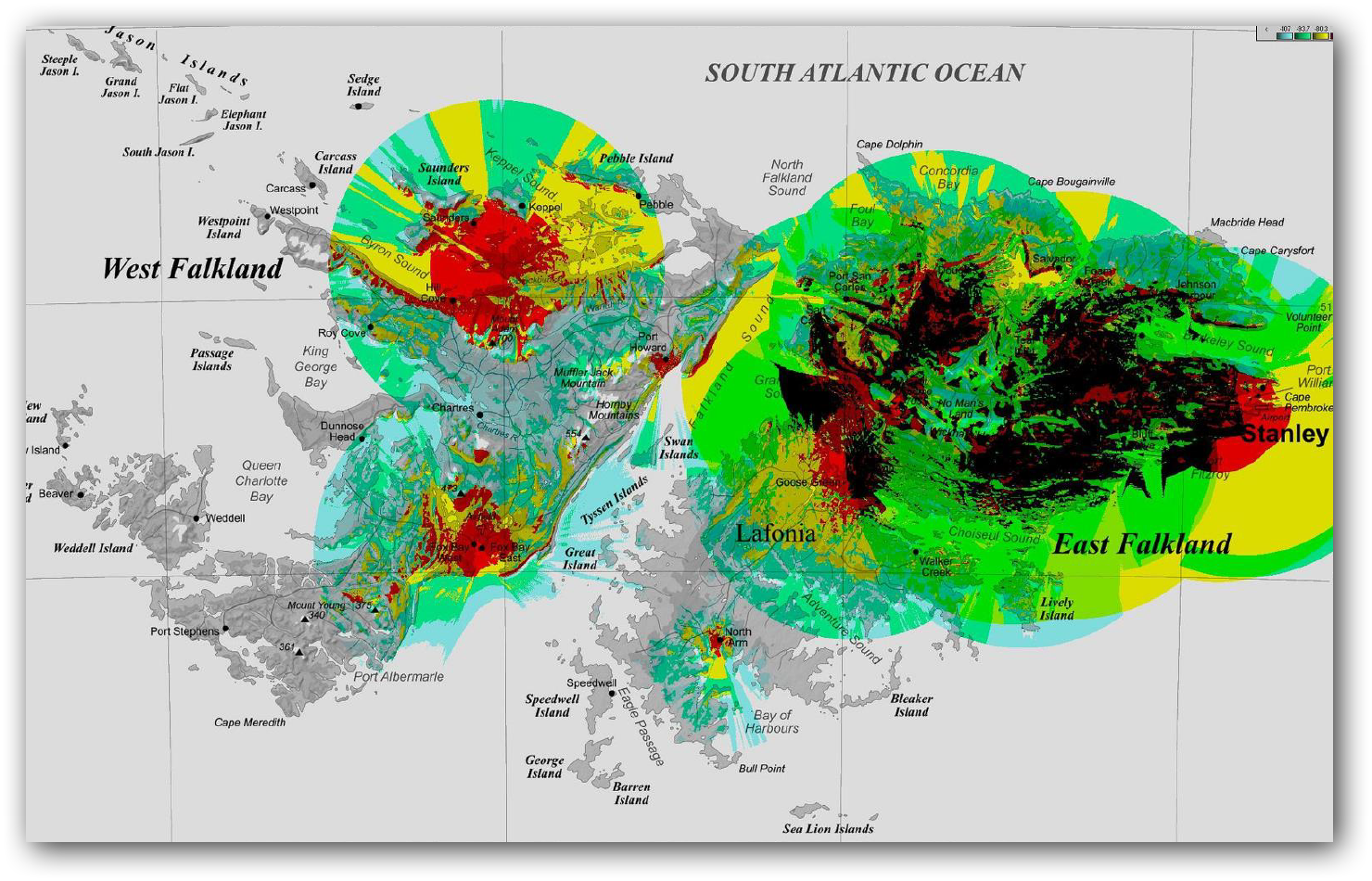
4G mobile coverage, as shown to the Technology Development Group in December 2021
Was the Network Designed for Coverage or Broadband?
Designing a wireless network to maximise geographic coverage differs fundamentally from designing one to provide consistently good broadband.
LTE-based broadband needs more than simply detecting a radio signal. As the distance from a base station increases, signal strength and signal quality generally deteriorate. Terrain can obstruct the path. Lower signal quality means the radio system may have to use more robust but lower-data-rate modulation, reducing attainable download speeds. Several customers sharing the same sector must also share its available radio capacity.
The result can be a connection which technically exists but does not necessarily provide the speed, stability or consistency customers expect from broadband. This is why simply replacing an older radio system with LTE alone should not automatically be regarded as rebuilding the network. The technology may have changed, while much of the underlying radio-network base-station topology has remained the same.
More Base Stations Change the Equation
One obvious solution is greater base-station density. Shorter radio paths generally mean stronger signals, better signal-to-noise ratios and greater opportunity to use higher data rates. Capacity can also be divided among more cells rather than concentrated on a small number of widely spaced sites. This is probably the rationale for the new Goose Green base station.
That does not mean covering Camp with hundreds of mobile towers. With such a small and dispersed population, that would make little economic sense. But it does mean that reliable FWA cannot be judged simply by asking whether a property falls within a theoretical coverage footprint. The key question is whether the network has enough sites, capacity, and radio margin to reliably provide the expected service at that property year-round.
So Is FWA Wrong for Camp?
Not necessarily. In settlements and locations reasonably close to suitably positioned base stations, modern LTE or 5G FWA could provide an excellent service.
For extremely remote properties, however, the economics become much harder. Building another terrestrial base station to serve perhaps only a handful of customers can be expensive. That is where today’s availability of Starlink fundamentally changes the calculation.
Rather than expecting one technology to solve every Camp connectivity problem, the sensible question may be which technology best fits each location. FWA may make considerable sense around settlements and other areas where properly engineered sites can serve enough customers. Starlink may make considerably more sense for isolated farms and remote islands.
St Helena Will Be an Interesting Comparison
This is why the announcement from St Helena this week is particularly interesting. St Helena Government and Sure have announced plans for a substantial telecommunications upgrade which includes a new FWA broadband service, alongside a major mobile-network upgrade. The stated ambition is to provide broadband speeds of hundreds of megabits (Only because of the island’s undersea cable connectivity).
That does not contradict Camp’s experience. If anything, it demonstrates the point. The performance of St Helena’s FWA network will depend on how it is engineered: where the base stations are located, how many are installed, what spectrum is used, how much capacity each has, how customers are connected and what resilience margins are built into the design. If those things are done properly, FWA can be an excellent technology.
Perhaps FWA Isn’t the Problem
Camp’s experience should therefore not lead to the conclusion that FWA doesn’t work. The more useful question is whether successive generations of technology have been fitted onto a network whose site locations and economics were originally driven by very different requirements. Moving from WiMAX to LTE was undoubtedly a technological improvement, but upgrading the equipment is not necessarily the same thing as redesigning the network.
This parallels the VoLTE issue discussed in my previous post. Camp’s continued reliance on 2G for mobile voice partly reflects the greater geographic coverage that 2G can provide from widely spaced base stations. Moving voice fully onto 4G through VoLTE could expose coverage gaps and potentially require additional sites. The same underlying issue applies to FWA: providing a usable 2G voice signal over a large area is a very different engineering requirement from providing a consistently reliable high-speed broadband connection.
Both issues therefore lead back to base-station density and network design. Newer radio technology can improve what each site can do, but it cannot remove the effects of distance, terrain and widely spaced sites if the number of base stations is not increased to improve reliability and higher broadband data rates. That may explain why FWA has acquired such a poor reputation in Camp—while it may be part of the solution elsewhere. Only Sure knows the answer.

Addendum – Island-Wide Television and Radio Services Outages
A familiar Falklands example shows what happens when a radio link’s signal-to-noise ratio deteriorates.
“The outages will run from around 1035 hrs to 1050 hrs local time, at their maximum. The length of outage will increase each day, peak on the 11th and then reduce down again. This can cause disruption to TV and Radio reception across the Islands including Mi-Player.”
Twice a year, residents are warned of island-wide interruptions to television and radio services when the sun passes behind the satellite that delivers BFBS signals. For a few minutes each day, the receiving dishes were effectively pointing not only at the satellite but also towards an extremely powerful source of radio noise — the sun.
The satellite signal itself had not suddenly become weaker. Instead, the background noise seen by the receiver increased, reducing the signal-to-noise ratio until the receiver could no longer reliably recover the wanted signal. As the alignment became closer, the interference increased; it peaked and then diminished again as the sun moved away.
This is obviously a different physical cause from the problems that can affect a terrestrial FWA link, but the underlying principle is similar. A radio link works because there is sufficient margin between the wanted signal and everything that makes it harder to receive. Reduce that margin enough through interference, obstruction, fading, bad weather, distance, or increased noise, and a previously usable link can become unreliable or fail altogether.
That is why simply saying that a location has “coverage” tells us relatively little about how reliable an FWA service will actually be.
Chris Gare, OpenFalklands, September 2026, copyright OpenFalklands